
“When I was a kid, I had honky-tonk music, I had rhythm & blues, I had zydeco, I had all the rock & roll stuff. It was pretty amazing,” Jesse Dayton told me back in 2016. “I think I’m a little bit of all of that.”
For singer, songwriter, guitar player, producer, and actor Jesse Dayton, the world has been nothing short of a musical playground. Growing up in the Texas town of Beaumont, hometown of the legendary Winter brothers, Johnny and Edgar, which is only a 30-minute hop from the Louisiana border, Dayton absorbed all the ingredients of a good spicy musical gumbo. From an early age, he took all of what he was hearing, cooked it up inside of himself, and eventually started spitting out his own brand of saucy blues-country-rock. And Austin was the pot he simmered in.
“People in Austin are lucky because of the live music culture that’s so deeply ingrained into us from young kids to old folks,” Dayton explained about the city in a profile of the infamous club Antone’s last year. “Clifford Antone’s family was from Port Arthur. His family knew my family in Beaumont. So Clifford came out and saw me play when I was fifteen years old at a place called the Boulevard Club, and he’s the one who really discovered me.”
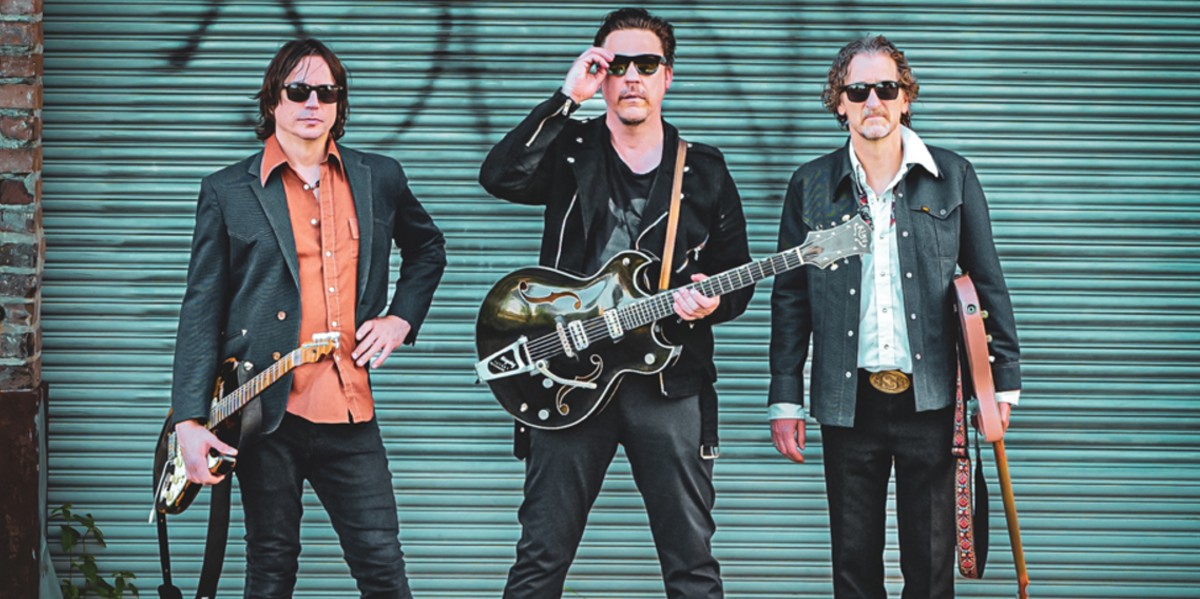
Among the last generation of new kids to cut their teeth on the Antone’s stage during Clifford’s time, Dayton, Ian Moore, and Johnny Moeller would later become known collectively as the Texas Headhunters. Releasing their self-titled debut album last year, and a new album on the way this summer, the trio knock out a blues rock crunch that springs from authenticity right down to recording together and letting the dice fall where they may.
For Dayton, a lot has happened with his career since our last Glide interview back in 2016. At the time, he was riding a high from the success of his solo album, The Revealer, and a tour with X’s John Doe. He had already worked with Rob Zombie, filled in for Billy Zoom in X while the guitar player was in treatment for cancer, and written and directed a horror film called Zombex. The man was on a roll.
Since then, he’s recorded more albums, including a collaboration with Samantha Fish titled Death Wish Blues, which earned them a Grammy nomination for Best Contemporary Blues Album; written a memoir, Beaumonster; and hooked up with Moore and Moeller to form the Texas Headhunters.
But when you spend some time talking with Dayton, you don’t pick up any arrogant, I’m a successful rock star vibes. If you didn’t know he was a top-notch musician who has played with such legends as Jimmie Vaughan, Buddy Guy, Johnny Cash, Waylon Jennings, and Warren Haynes, you’d assume he was simply another cool guy hanging out at Antone’s. His sense of humor is well-known, and he loves to talk.
So on a recent Tuesday afternoon, Dayton filled me in on his past, present, and future with the same humility and joviality that make this guy one of the true characters of Texas music. “I’m from Beaumont. I’m damn near a twenty-four karat jewel, Cajun.”
Being a Beaumont boy, you’re not that far from Austin. When did your passion for Austin really begin?
Well, I could have gone to New Orleans just as easily because it’s about the same length of a drive from Beaumont to New Orleans as it is from Beaumont to Austin. I was going across the border playing in zydeco bands when I was underage. So I had this whole thing with Louisiana. But my mom and dad were the first ones to make it out of the oil fields, and they went to the University of Texas. So when I got to Austin, I saw all these smoking-hot hippie chicks in halter tops and hip-huggers (laughs), plus there were so many good guitar players here. To me, New Orleans was always more like a horn town than a guitar town. So I just decided, and I literally left the day after I graduated.
You, Ian, and Johnny got together in the Texas Headhunters almost because of Antone’s, correct?
Clifford found all three of us. Clifford saw me playing in Beaumont at this dive bar and gave me some blues records and said, “Hey, learn these and come by the club and I’ll get you onstage.” I was like fifteen. Clifford is from Port Arthur, so my family knew Clifford’s family before the whole club thing. Johnny’s parents basically just dropped him off at the club. He was like a puppy dog that Clifford found and took him in. Then Ian Moore, he grew up at the club. The first electric guitar Ian ever got was from Stevie Ray Vaughan, which is crazy. He was like a little kid. So all three of us had this whole thing with Clifford.
So, how it came about was that Samantha Fish, Tab Benoit, and I all have the same manager, Rueben Williams. And Rueben Williams called me one day, and I’m not kidding you, Samantha and I had toured together for seventeen months straight; like, it was the longest tour I’d ever done in my whole life. And that record got nominated for a Grammy, and by today’s standards, it was a hit record. But man, I was so burned out, I just wanted to go home and sleep in my own bed for at least a month. So I did, and Rueben goes, “Hey, what do you want to do now?” And he goes, “You should get a couple of your friends and go make a Texas blues record.” I was like, “What about Ian and Johnny?” And Rueben goes, “Do you think you can get Ian Moore and Johnny Moeller?” And I go, “Yes, I do, I’ve known them since we were kids.” He goes, “Call’em” and I called them and they were totally into it. And that’s how this whole thing started.
You know, that first record we recorded in like five days, and the new record we just finished, we recorded in five days. We’re doing it old school. Everybody is in the room at the same time, we’re not flying stuff around, you know what I mean, cause all the records we love are like that.
So, when did you finish this new record?
We just finished it. We just all signed off on mixes and sent it to the record label. It’s even more raw than the first one, because we’re not trying to put any slick singles and do any radio stuff. We’re just at a point in our career where you get what you get, and when we don’t get wrapped up in being self-conscious about all that stuff, it sounds so much better.
So you’d say it’s all about pure authenticity
Sure, it is. We’re not trying to recreate the blues. We’re just playing our version of it, which obviously has a lot of different influences in it – rock, some country, and stuff like that. This is a three-man guitar record. People come see our show, and they’ll be blown away because it’s a high-energy show. You would think with three guitar players it would just be too much going on, but we really know how to stay out of each other’s way. We have a lot of respect for each other while we’re playing, so it’s not just what I call guitarmageddon (laughs). It’s not just a bunch of whiddly-whiddly all night.
Speaking of guitars, when you first started playing guitar, what was the hardest thing for you to get the hang of?
I took to it like a duck to water. I wasn’t a natural baseball player, and I wasn’t a natural boxer, even though I liked that stuff. But when I learned how to play guitar, once I kind of figured out how to play twelve-bar blues on an old Silvertone guitar that I bought at a garage sale, it was all over. I just immediately started playing. A lot of people are like, well, I worked on my scales, and I worked on my chords. I didn’t really do any of that stuff. I just immediately started mimicking guitar parts that I heard on my stereo, like ZZ Top or Steve Cropper or some rockabilly guitar styles. And I got better within a year. I had grown exponentially. But playing guitar was never a struggle for me.
Which guitar do you favor now, and when did you discover that one?
Well, I have a one-of-a-kind guitar. The only other person I have found who owns this guitar is Nick Curran, who passed away. But I got the first one. A friend of mine, Jason Burns, made me this guitar. I was going to be in this Rob Zombie horror movie, and Rob was like, “Man, it’d be really cool if you had an evil guitar, like a real menacing-looking guitar.” I’m like, “Get some money from Harvey Weinstein and I’ll have one made.” (laughs) So he did, and I had this guitar made, and it’s just an amazing guitar. It stays in tune way better than any Gretsch. So it’s kind of my main one. It’s a black double-cutaway guitar. Then I’ve been playing this 1973 Fender Telecaster too, which I love.
Have you always been voice confident?
Not when I first started. I was pretty self-conscious about it. Then I got really confident about it, and now I’m kind of like, I just do whatever. I don’t think about it at all now. But I did play 10,000 shows. That’s the number that Malcolm Gladwell said, if you do something 10,000 times, you’re going to get pretty good at it (laughs). I remember I was in Houston and I was opening up for Merle Haggard two nights, and I love Merle Haggard, and I said, “Hey Mr Haggard, thanks for having me tonight. I sure do love your voice, man.” And he goes, “Show me a great singer and I’ll show you someone who sings all the time.” It’s so true. So once you find your voice, I think you could always tell like a real, honest singer because they sing as they talk.
You have this great sense of humor that you put into your songs. That being said, would you say you are more driven by stories than emotions?
Well, I hope the stories are emotional, but I am definitely driven by stories because of these Texas singer-songwriters that I grew up around. I got to see Townes Van Zandt a lot, and I got to see Guy Clark a lot. All these kinds of singer-songwriter guys that weren’t just singing blues lyrics or stuff like that, and that stuff all hit me really hard. I just think there’s a lot of that in my music. There is a lot of that Texas storyteller thing.
We lost Joe Ely last year. What do you think was his greatest gift to music?
Oh, I think Joe’s greatest gift to music, by far, was that he was untouchable onstage. You can’t really compare Joe, maybe Springsteen and Springsteen by the way loved him and spoke at his funeral and all that, but I’ve never seen a front guy have an audience eating out of their hand like Joe Ely. That was what he was really good at: he was just a great frontman. My little band opened up for him when I was like sixteen, and he took me out to breakfast after the show, and it meant the world to me. He didn’t have to do that.
In your opinion, what do you think is the biggest mistake a songwriter can make?
I don’t know. I think the mistake musicians make a lot of times is that they lie to themselves about whether this song is actually really great or not. Like Kris Kristofferson. I worked with him in the 1990’s, and he told me, “Great songs aren’t written, they’re re-written.” So a lot of times I’ll see lazy songwriters, and they’ll just throw whatever rhyme scheme is easiest. They don’t go the extra mile. You have to be a critic of what you’re doing for yourself. You have to want to keep the bar as high as possible. So I think that’s the biggest mistake. Is this bridge I just wrote for this song really great, or am I just kidding myself?
Is there a song that you have written that has changed its meaning over the years since you wrote it?
Not totally, I mean, I wrote this protest song, “Charlottesville,” about what happened in Charlottesville when they had that march, and that poor girl got run over by that car. They were having all these racial tensions and all that stuff. The song did pretty well; it ended up in Rolling Stone Magazine, a lot of people heard it, and NPR picked it up and did an interview with me. I don’t usually get political in songs, but I have to remind people that we all heard “Ohio” by Crosby, Stills, Nash & Young. It was on the radio all the time growing up. Johnny Cash had a bunch of protest songs, Kristofferson. I wrote this song, and now, because of what’s happening in America, I can kind of feel it’s taken on a whole other life.
There are other songs, like there have been a couple of love songs, where they come back into your life, and you’re in a great place in your relationship, and they mean more to you. There is a song I got called “Mrs. Victoria,” and that’s a really important thing because of what’s happening with race relations in America, especially the South, where I grew up. I grew up right next to Vidor, Texas, which is the home of the Ku Klux Klan and the Dragon and all that stuff, so I’ve seen a lot of changes, and some of these songs, they, like history, end up repeating themselves.
You wrote a book, Beaumonster, in 2021.
Yeah, during the COVID time. It kind of saved my life, actually, cause it gave me something to do. But it did well. It’s on a big publishing company, and they did like all these big books, like the Sex Pistols book, The Replacements, and all these rock bands. But you know, what really did well for me on that book was my audiobooks. I did it in my own voice, and I’ve never done that before. And that really was the hit seller for me.
When you were writing it, what do you think was something that surprised you or that you realized about yourself?
What surprised me was that I never thought about the past. I’m not a rearview mirror guy. I got new stuff going on that is happening right now, and it’s exciting, and I don’t ever think about all that stuff. So when I sat down to think about it, it kind of blew my mind. The premise of the book is all the stories about me and my brushes with greatness, with all the people I’ve worked with. There are a few people over the years whom I couldn’t stand, and I just decided to leave them out of the book. So the only person who gets thrown under the bus in the book is me (laughs). So I left out a couple of people that I couldn’t stand working with. I was like, ” Why do we need another book like that? Why don’t we just keep this feeling good?
A lot of people told me they liked the chapter on Johnny Cash, the one on Waylon, or the one on Doug Sahm. I thought it was a nice way to let people see behind the scenes. There’s a bunch of great stories pertaining to whatever record I was recording or who I was working with. There’s a chapter on Willie. I just wanted something entertaining that I would want to read.
You worked with Waylon, then with his son, Shooter.
He’s a sweetheart. I met him when he was literally like fifteen, and I was twenty-five, cause I got ten years on him. I’m closer in age to him than I am to anybody in Waylon’s band, and he’s talking to me about Marilyn Manson and all these people, who he would go on to produce later, which is crazy. So me and Shooter would hang out. Waylon loved that we hung out cause Waylon adored Shooter. I mean, his whole life was Shooter. So if Shooter wasn’t around, Waylon would be like, “Last night, Shooter and I watched a horror movie, and it was crazy.” So I was playing guitar on that Waylon record and then fast-forward down however many years and me and Shooter are making a record together.
What do you think of him as a producer?
He’s great! We had a great time. He has a lot of great ideas, and he’s fun, and he’s just a real musical guy.
Does he give you a lot of suggestions or pretty much lets you be you?
It’s kind of a combination, you know. He helps with the arrangements, and he helps if we’re having problems getting harmony or a little guitar part or something. He’ll come up with some little hook. He’s very collaborative. Anybody who goes into work with Shooter and they’re worried about him taking over their record, they shouldn’t be working with him cause he’s not that kind of guy. He’s not coming at it from a place of ego. He’s coming up with like the best idea wins.
How are you in the studio?
I’ve been pretty lucky to work with a bunch of people, producing them, but Ian and Johnny and I are basically producing these Headhunters records together. I’ve worked with a lot of great producers so I’ve kind of been able to gleam some really cool stuff from them over the years. I love producing records, I love hanging out in the studio.
And you recently worked with Courtney Santana on her brand new record.
Yeah, she was singing with the Shiny Ribs, and I had been looking for a gospel singer to do some kind of gospel music with a rock influence, almost like seventies Stones meets Tina Turner. So we went in to make that record together, and I wrote all those songs, helped her, and produced that record. I’m pretty proud of it.
Who was the first real rock star you ever met?
That’s a great question. Let me think about that. I think the first real, true rock star that I ever met was Billy Gibbons. They were in Beaumont, and I don’t know if they were playing there or whatever, but I saw him at this Mexican food restaurant, and I was just so freaked out. You know what, that’s not true (laughs). The first rock star I really met was Johnny Winter. I met Johnny Winter at the Dairy Queen in Beaumont. He was getting a hot fudge sundae, and he had all these tattoos all over him, and this was in the seventies, and I was a little kid. That was back when only like bikers and sailors had tattoos, so he looked like a total freak. I said, “Hey Mr Winter,” and he goes, “Oh man, call me Johnny.” He was so cool, and he sat down and ate his sundae with a friend of mine and me. We sat there and talked to Johnny Winter, and he was making all these jokes and was such a sweet guy. Then I met Billy, a couple of years after that, at this Mexican food restaurant in Beaumont. And those were two of my favorites. I mean, being a Texas guitar slinger, I’m still ripping those guys off to this day.
What was one of the most unusual things to happen to you onstage?
I slipped off the stage. One night, I was playing at Jack’s Shooter Shack in Hollywood, and Quentin Tarantino and Dave Alvin were at the show, and I fell off the stage, and I ended up having you ever seen those milk crates that they put microphones and stuff in, the milk crate got stuck on my butt in front of an entire audience. It was packed. And Dave Alvin and Quentin Tarantino came over, and they pulled the crate off my butt (laughs). And I just walked back up onstage, totally humiliated, but finished the set as if nothing had happened. You can’t make that up (laughs).
What was the toughest song that you tried to learn to play on guitar?
Oh, I got the song for you. I think it was 2010, maybe, and I got asked to play on a Glen Campbell show in Nashville. He was there, and we were going to play with Glen. In fact, if you look up Glen Campbell Rhinestone Cowboy Americana Conference Nashville, you’ll see me, I’m playing guitar for Glen. But I had to learn “Wichita Lineman” and “Wichita Lineman” has about four or five key changes in it. It was written by this guy named Jimmy Webb, and it’s a very hard guitar part to play. All that Glen Campbell stuff that I learned, I actually had to study like really hard to pull that gig off, because Glen’s guitar parts were so elevated and so above everyone, it’s just unbelievable. So it was hard, but he put me at ease, and he was really cool.
You’ve made a lot of records. Which one, top to bottom, do you think you were totally on point?
There have been a few of them. As far as the guitar playing, the Waylon record. I feel like I really nailed that record. As far as a solo record, I think The Revealer is kind of hard to beat. “Daddy Was A Bad Ass” is my song, and it’s the closest thing to a hit. It’s up to like two million or whatever now, but I got a feeling that I just nailed that one. I was excited about it. I knew that song was going to put me in another place, and it did, it really helped me, and now they play it on Outlaw Country like Terrestrial Radio plays Journey and Foreigner. They play me that much (laughs).
You were recently on the Outlaw Country Cruise. How was that?
Lucinda Williams, Steve Earle, and I are the only three artists who have done it all ten years. Lucinda was great, sounded great, she’s got new songs, she’s doing great. I love her, and I love Steve so much. They have been like big brother, big sister to me.
But it’s the coolest thing. If you’ve never done it, you should do it because you’ll make friends for life, because everybody there loves the music, and people are so sweet, and they give you your space, and they’re not trying to get all up in your business. Plus, you only play three times, so you’re out for a week, and you’ve got plenty of time to just hang out. I sat on my balcony looking over the ocean in Central America and just read a book one day.
What were you reading?
This book called The Big Goodbye. It was about the making of Chinatown with Jack Nicholson and Roman Polanski. It’s about movies in Hollywood in the seventies. It’s really good.
No romance books?
No romance (laughs). I’m not waiting for Fabio to come and sweep me up.
I saw a picture of you and your son on your social media. How easy has it been to be a father on the road all the time?
I’ve done well. I’ve got a great wife, and we’ve been together like thirty years. I’ve been in his life more than probably my dad was in mine, cause my dad was a workaholic all the time. But my son and I have a great relationship, and I’m really proud of him. He’s a lighting director, so he tours with bands and does big festivals, and he really loves his job.
You know, my wife was raised in a big show business family. She comes from this dynasty in Los Angeles. Her grandfather started the publishing business. He discovered Phil Spector, he discovered Leiber & Stoller, who wrote that song, “Charlie Brown.” They wrote that song about her dad, cause his name is Charlie. Then they wrote “Yakety Yak” about her grandmother. They were living in her grandparents’ basement. Lester Sill was his name, and he was a legend. If you look him up, you’ll see this guy was there at the beginning of rock & roll. Her grandfather worked with Motown, Elvis, the Beach Boys, and Johnny Cash. Then her dad, Chuck Kaye, became even bigger, and he did like the Eagles, all these huge acts, Madonna. He had a boat called Imagine cause he was John Lennon’s publisher.
So Emily grew up in Hawaii, and when she came to the mainland, to California, she got a job at A&M Records, and she discovered Soundgarden. She was the first little rock & roll A&R person to go up to Seattle. She’s had as crazy a career as I have. She worked at A&M Records, she was a music executive at Sony Pictures, she did all these big films, and she started this company called the Chop Shop, which was one of the first music supervision companies, and remember those vampire movies, Twilight? She did all those too. So she’s had a crazy career. All this stuff that I’m doing, she’s totally used to it (laughs). You’ve got to have a gal like that or else you’re in big trouble.
How did you meet her?
I met her at a wedding in Seattle, and she was on a blind date at this wedding. This friend of mine was getting married, and he goes, “Man, I’d love for you to come up and sing a song at my wedding.” I was like, yeah, sure man, I’ll do it. So I get up there and start singing and I see this tall brunette, smoking hot, and we’re just eyeing each other the whole time. So I walked offstage after I got done and introduced myself to her, and she goes, “Hey, do you want to go out with us and get a drink after this?” She doesn’t drink, by the way; she was just going for us. She goes, “I’ve got to get out of these wedding clothes.”
So me and this guy she is on a blind date with are up in her hotel room, waiting for her to get undressed in the bathroom. And I just looked at the guy and said, “Alright, man, tell me the truth, how long have you known her?” And he goes, “Well, I met her about six pm today.” I go, “Dude, look, it’s not even 9:00 and I’m going to do everything I can to lock this one down.” And she came out of the bathroom and he was gone (laughs). Then me and her never left her room. The next morning, I bought a plane ticket from Seattle to Laguna Beach, where her house was, and I showed up at her house unannounced and I said, “I’m leaving my suitcase here.” And she was like, “You’re fucking crazy.” I said, “I am crazy. You’re stuck with me.” And I have literally been with her ever since. Isn’t that crazy? But there was something there and we just sat and talked all night. When you start asking a woman do you want to have kids the first night you meet her, it’s serious.
What do you have going on for the rest of the year?
The Headhunters record is coming out this summer and we’re going to go on tour. We’ve got a few big shows we’re doing. In 2027, I’m going to make a full-on Outlaw Country record. I’m going to go back to The Revealer and go back to that whole thing. Me and Samantha are playing in Hollywood on Halloween night at the Whisky-A-Go-Go (laughs). That will be crazy.
You going to dress up?
Oh yeah, you kidding me (laughs)
Sam likes to dress up
Oh, she’s like a little Halloween freak show. She loves it. She’s like my little sister, you know.
Before you go, can you share with us a favorite memory of Stevie and Jimmie Vaughan?
The greatest memory for me was, my brother and sister were older than me and they were going to UT and they were going to Austin. I’m still living in Beaumont and all I’m hearing about, and I’m like a little kid, and all I’m hearing about is these guitar players, Stevie Vaughan and Jimmie Vaughan. At that point, it was like, that guy that plays in the Thunderbirds has a little brother who is supposed to be better than him. So anyway, Lou Ann Barton, who is a blues singer from Austin, she plays a gig at this place in Beaumont called the Old Beaumont Café and her guitar player was Stevie Ray Vaughan. I walked in to see them, it was all ages and there were 300 people in there, and I just left thinking, you know, those British guys are not as good as I thought they were. Literally, I was going around telling people, “This guy plays better guitar than Eric Clapton. He’s a better guitar player than Jimmy Page. And he’s from Texas.” And it made me feel like I could do it, and I didn’t even play guitar at that point. I was just this little kid watching.
Now the kicker on this whole story is, two months ago I was invited to play a tribute to my dear friend Raul Malo, who passed away, at the Ryman in Nashville, two nights sold out. Me and Raul were really close friends and The Mavericks manager calls me and he goes, “Hey man, would you mind if Jimmie Vaughan sat in with you on your songs?” I was like, “Oh my God, that’d be the greatest thing ever.” Jimmie has known me since I was a kid and I’d never played with him before so I told Jimmie that whole story about Stevie, and Jimmie told me, “You’re not the only one who has told me that.” He goes, “I’m not just talking about people talking about how great my brother was; people from Beaumont, Texas, started finding out about us and they started driving from Beaumont to Austin to see us play.” I go, “I know, my brother was one of them.” So it was really cool. It was like a real circle of the first time I got turned on to the Vaughan brothers.
Photographs by Ray Redding
Comments
Loading comments...
Leave a Comment