
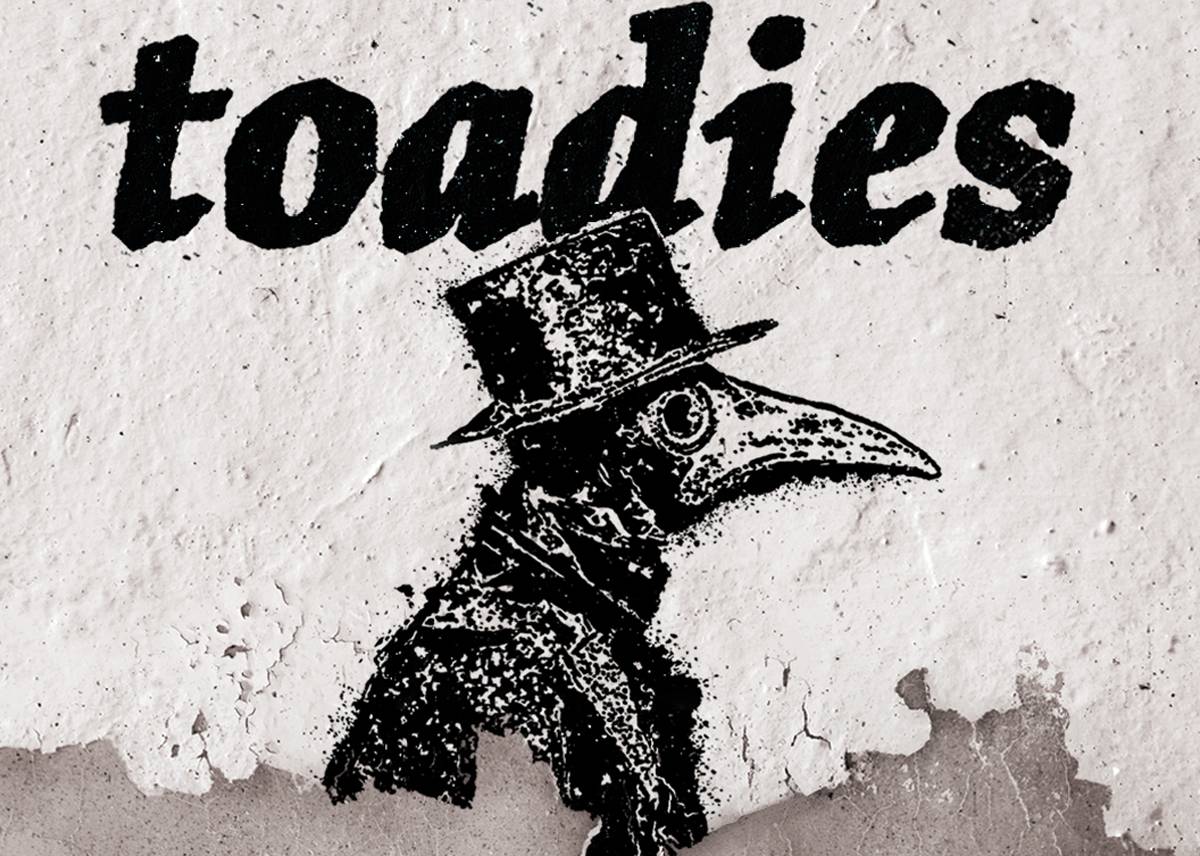
Toadies’ eighth studio album continues the band’s throwback alt-rock sound and stays true to the raw, aggressive roots of their early work. The Charmer was one of the last albums produced by the late Steve Albini, with whom the band had always wanted to work. As is typical with Albini albums, The Charmer has a no-frills sound and an uncompromising intensity. It was recorded in an analog style, as a live band with minimal overdubs, to capture the band’s aggressive live sound. For the most part, it works.
Most of the album was written during the COVID lockdown, and for the first time ever, Toadies went into the studio with completed songs. The material has that familiar Toadies feel — aggressive punk-rock energy paired with classic-rock riffs, odd time signatures, melodic hooks, and surprising left turns. It’s heavy at times, soft and brooding at others.
The Pixies-inspired instrumental track “Ash’s Theme” opens the album with a mix of thumping bass, grimy rock riffs, and jangling lead licks. The genre-mashing arrangement picks up steam and heads in different directions, never settling on a particular style or theme. Vaden Todd Lewis’s heavy rhythm guitar clashes with Clark Vogeler’s breezy melodies, creating tension that never dissipates.
“Come to Life,” perhaps inspired by COVID, discusses malaise and a feeling of helplessness. “I know you’re lonely, but you’re not the only one home tonight. I’m right here beside you waiting for you to come to life,” Lewis sings. The song uses soft-to-loud dynamics and the juxtaposition of electric and acoustic guitars to drive home its tension.
Lewis’s monotone vocals have never been one of the band’s strengths, and he’s lost some range over the years. But Toadies make up for that with energetic riffing, endless hooks, and small doses of eccentricity. The mid-tempo rocker “Long Time” slowly builds intensity, getting heavier with each verse until Lewis is shouting over his power chords and Vogeler’s shrieking string bends.
On “I Walk a Line,” Lewis plays an off-kilter, bluesy rock riff in a staccato style that abruptly cuts off the rhythm and repeats rather than following a natural flow. The infectious angular riffing, blues scales, and Mark Reznicek’s pounding drums recall the band’s fan-favorite song “I Come from the Water” from 1994’s Rubberneck. Among the crunching guitars, Lewis sings about obsession. “I can’t feel my legs, but I follow you for miles, and the visions in my head are frantic and wild,” he sings.
The album doesn’t quite measure up to Toadies’ greats like Rubberneck and No Deliverance. There aren’t any bad songs, but the album’s peaks aren’t as great as some of the band’s prior work.
Toadies are at their best when giving in to their manic impulses. The infinitely catchy “Damage” pairs frenzied head-banging riffs in the verses with discordant noise in the choruses, all while Lewis sings about a dysfunctional relationship with tongue-in-cheek humor. “I told her that I only really want to make her happy. Then we both started laughing at the thought of being happy,” he sings.
The bouncing rhythm of “I Call Your Name” always feels on the verge of combustion. The squealing feedback and ultra-distorted guitars on “Gasoline Jane” give it the raunchy sound of a punk band playing at a sweaty underground club.
Comments
Loading comments...
Leave a Comment