
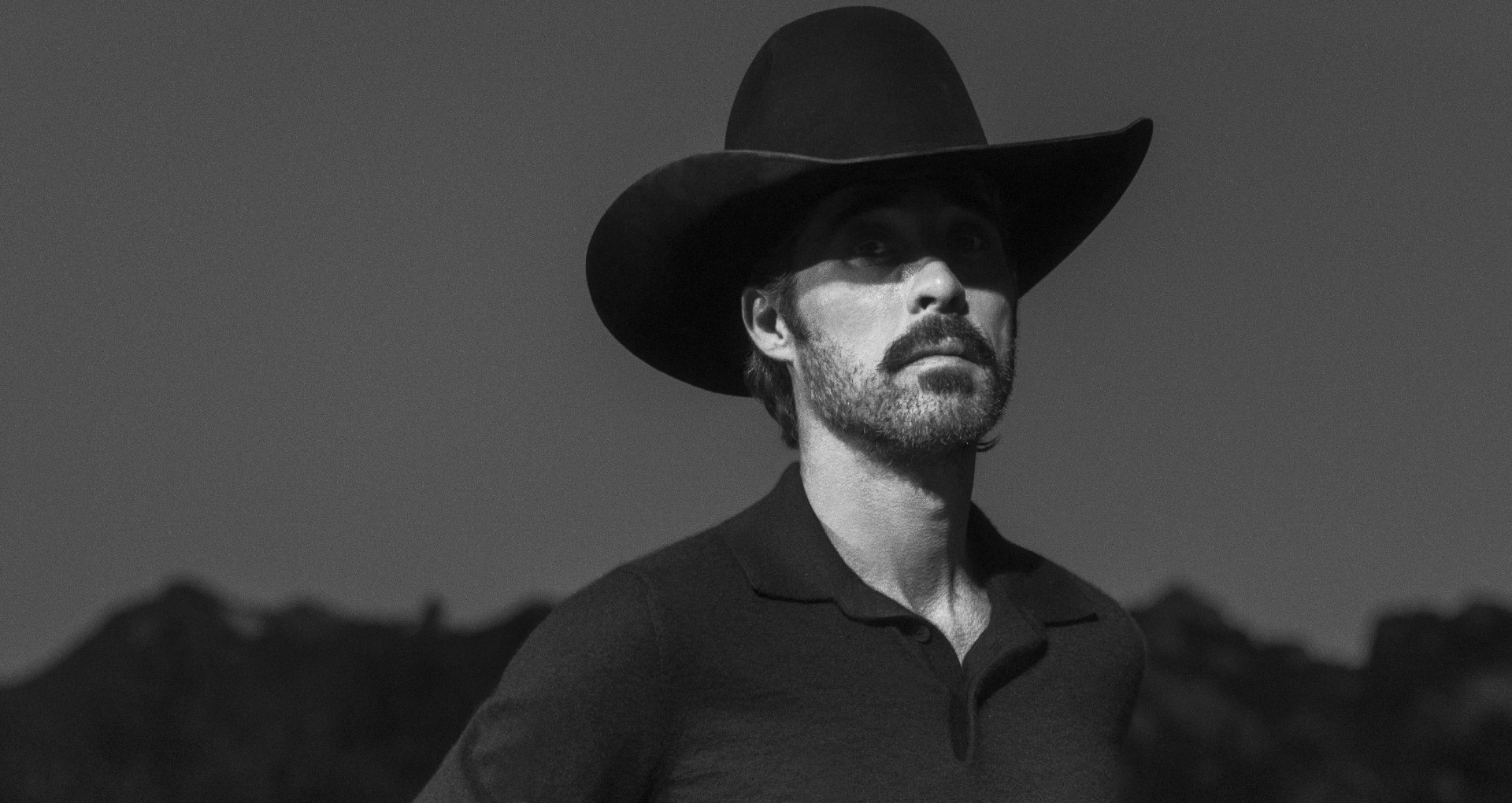
There has always been dust in Ryan Bingham’s music.
Not the cosmetic kind Nashville sometimes sprays onto records to make them sound “authentic,” but the real thing—the dust kicked up from rodeo arenas, West Texas highways, desert wind, and nights spent drifting between cheap bars and stranger towns. His voice still sounds like it has been dragged behind a pickup truck for a hundred miles and somehow emerged stronger for it: scarred, weathered, alive.
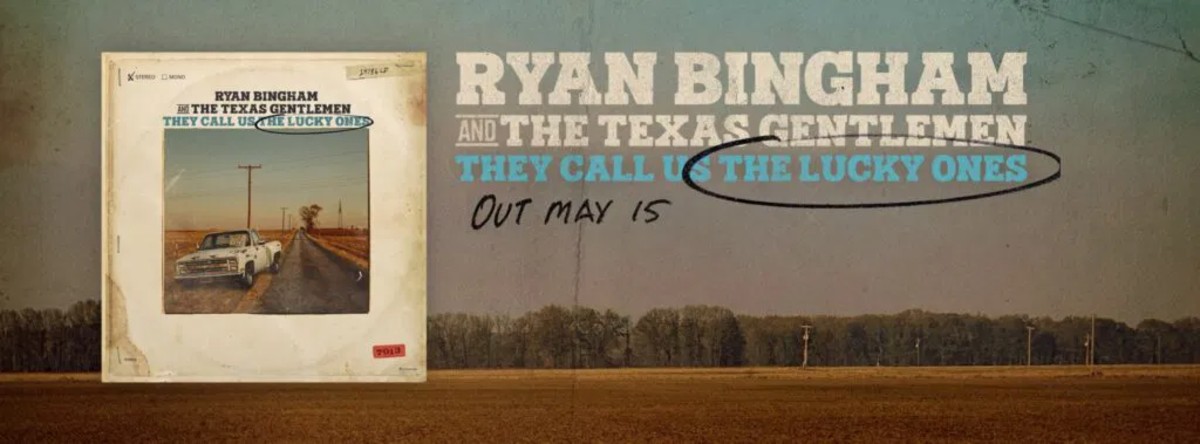
That voice returns on They Call Us The Lucky Ones, Bingham’s first full-length album in more than seven years, recorded with The Texas Gentlemen. The title carries a wink. Lucky? Maybe. But Bingham’s life has rarely unfolded like a charmed one.
Before the Academy Award for “The Weary Kind,” before Crazy Heart, before his fan-favorite turn as Walker on Yellowstone, there was New Mexico, West Texas, and a life built on motion.
“There’s a spirit to that area,” Bingham says. “You don’t just grow up there—you survive there.”
He says it like a man evoking scripture.
He still talks about southern New Mexico with the reverence usually reserved for old lovers and dead outlaws—those endless sunsets, the isolation between places like Hobbs, Carlsbad, Hatch, and Deming, the silence that can either sharpen your imagination or swallow you whole. For Bingham, it did both.
“That solitude leaves a lot of room for imagination,” he says. “I always find myself going back to that place visually in my mind whenever I’m writing songs.”
As a teenager, he bounced between New Mexico and Texas, spending time in Farmington, Santa Fe, Albuquerque, and the rodeo circuits that ran through Hobbs, Carlsbad, Houston, Laredo, and Stephenville. Bull riding paid in bruises and stories.
Music arrived like contraband.
His family owned a bar between Hobbs and Carlsbad called the Halfway Bar, and his uncle salvaged stacks of old vinyl records from the place. Bingham wore them out.
A live Marshall Tucker Band album hit him particularly hard.
“I remember hearing that voice and just that power,” he says. “Living in Hobbs, there wasn’t a whole lot going on musically. Those live albums felt like I was there.”
Later came Texas dancehall staples like Gary P. Nunn and Joe Ely. Then, in one gloriously strange teenage detour, his sister took him to see Cypress Hill.
“Quite an experience,” he laughs.
That eclecticism bleeds all over They Call Us The Lucky Ones. Country, blues, border ballads, rock-and-roll, corridos, Cajun rhythms, Tejano flourishes—it all drifts through the record like radio stations fading in and out on a midnight drive across state lines.
“It all comes from somewhere,” Bingham says. “That’s what American music is.”
The chemistry with The Texas Gentlemen gave the songs fresh oxygen. The collaboration feels less like a calculated partnership than a bar fight where everyone somehow ends up harmonizing.
“We don’t have to communicate a lot,” he says. “It’s almost like we can read each other’s minds.”
That instinct shaped the album’s loose, lived-in sound. Songs were recorded live, often in just two or three takes.
“Nothing feels forced,” he says. “I like letting the imperfections stay in there.”
That philosophy extends to songwriting itself. Bingham doesn’t chase concepts or labor over grand artistic manifestos. Songs arrive when they arrive.
“I’ve never been one to force it,” he says. “I just let them come when they’re meant to.”
Even “Cocaine Charlie,” one of the album’s darker songs, emerged from stories rooted in the Texas-New Mexico borderlands—a region whose beauty often exists side-by-side with violence and myth.
And through it all, Bingham remains what he has always been: stubbornly independent. Since leaving the major-label system after his early albums, he has built his own machine—assembling his band, crew, tours, and records on his own terms.
“I’ve always been a touring musician,” he says. “That live experience is what it’s always been about.”
Offstage, he reads Bukowski and Hemingway—writers who understood hard miles and haunted men.
Which makes sense. Ryan Bingham has spent much of his life moving toward the horizon, never fully settling, never fully disappearing. He’s still a drifter, even now.
“That’s just how it is,” he says. “Everybody’s got a little independence—and we’ve all got a little anchor too.”
For now, the road calls again. And Bingham, as always, answers.
For story ideas and suggestions, Brian D’Ambrosio may be reached at dambrosiobrian@hotmail.com
Comments
Loading comments...
Leave a Comment