
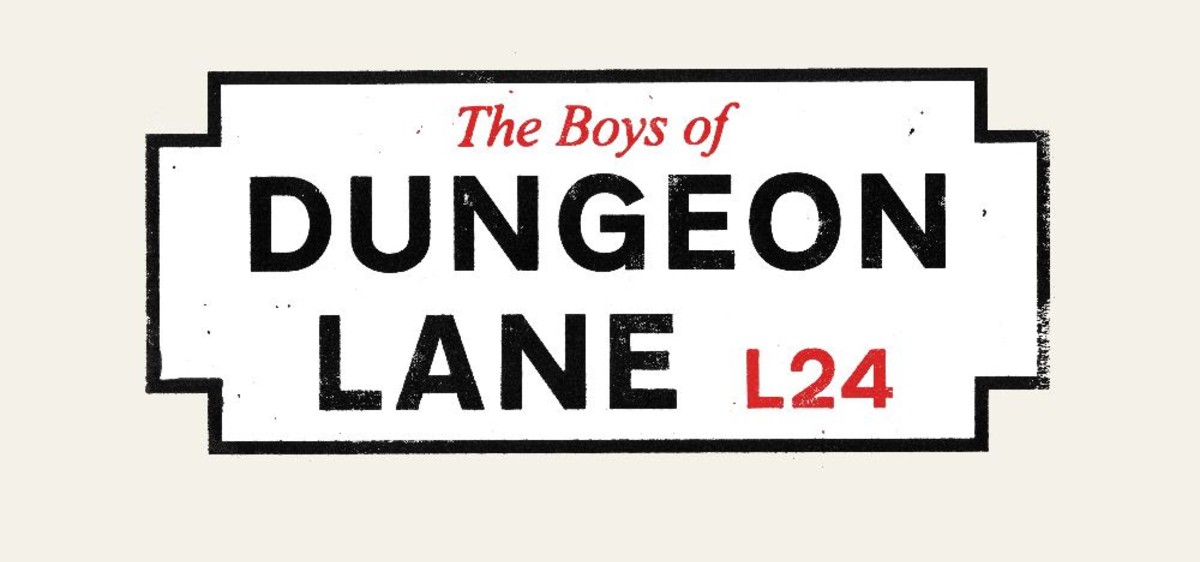
For the last five years, Paul McCartney held studio sessions with producer Andrew Watt (The Rolling Stones, Pearl Jam) to record material for a new album, which is now being released as The Boys of Dungeon Lane. The title comes from a line in the third song, “Days We Left Behind,” one of a few in which McCartney looks back on life before The Beatles. That song sets the scene for McCartney’s close friendship with John Lennon (though he is not mentioned by name), and another, “Down South,” relates a hitchhiking escapade with George Harrison.
Although The Boys of Dungeon Lane isn’t a concept album, the ideas of memory, a long life, and a successful career are never far from reach. It may not be an accident that it was recorded during or shortly after several other projects McCartney was involved with that looked back on The Beatles’ legacy: Peter Jackson’s documentary Get Back (2021), the 2023 single “Now and Then” (called the final Beatles song), and The Beatles Anthology, which was re-released in 2025. On the heels of this burst of Beatles interest, McCartney sounds vital as ever, giving us a solo album that sits among his best work.
Boys revels in the styles where McCartney has always been strongest. “Life Can be Hard” resurrects the cabaret of “When I’m 64,” and “Momma Gets By” has the nostalgic music hall quality of “Martha My Dear.” “Ripples in a Pond” sounds like an unreleased pop track from the ‘80s, and “Lost Horizon,” a forgotten song found by recording engineer Eddie Klein, reminds us that the octogenarian Knight Bachelor can still write killer rock grooves. Yet, nowhere does Boys feel stale or indulgent. Throughout the album’s roughly 47-minute length, McCartney gives his songs the musical depth and cinematic scope for which his best writing is known.
“As You Lie There” sets the tone with its unusual opening chord (that McCartney stumbled across on guitar during his first meeting with Watt) and its duality. In one setting of the song, McCartney confesses love for a girl he met only once, and in the other, he switches to a minor key, grinds on distorted guitars, and obsesses over whether the girl ever thinks of him. It seems like a memory of teenage Paul, but even so, the irony is almost too thick to swallow. This many years removed, the possibility that the cultural icon ever worried about his significance in anyone’s eyes comes as a shock, whereas many people almost certainly have worried about their significance in his.
Yet, here we are, at the beginning of the record, engrossed in this confessional scene and strangely off balance. McCartney sustains this intimacy and duality throughout the album, in which every good thing is edged with sorrow and often colored by vivid contrasts between major and minor keys. “Mountain Top” puts the bad back in trip with a chaotic eruption in double time, while the good-time blues riff of “Come Inside” opens up to a darkly confident chorus, then lifts itself off the ground with a desperate, pleading bridge. On “Salesman Saint,” McCartney describes the dedication of his parents during the economic grind of the war, lifting them out of it briefly but poignantly on the bridge singing “So they learned to carry on/ With laughter and a song.”
The only song that is wholly a happy thing is the delightful second single, “Home to Us,” which features a duet with Ring Starr, who also plays drums. It’s impossible not to smile when you hear Starr’s voice come in after McCartney’s. Really, it’s impossible not to love the whole record. McCartney has not only put some of his best material forward here, but his articulation of the songs is masterful. Playing nearly everything, McCartney voices and layers instruments like a champ, delivers intricate and sometimes campy vocal arrangements (as in the creeping bum, bum, bums on “Never Know” and various random nonsense like “hot potato”), and shows exquisite taste on his lead guitar parts on the gentle ballad “First Star of the Night.”
There’s only one thing that takes a bit of getting used to. McCartney’s voice has sounded indestructible for so long that signs of age come as something of a surprise. His lower range is a bit froggy and his upper range a bit tremulous, but he lacks almost nothing in power. Given that, as recently as 2025, he was singing 36 songs a night on the Got Back Tour, that’s pretty freaking great. Anyway, you can’t blame the guy for getting old. It had to happen sooner or later.
Comments
Loading comments...
Leave a Comment