
The entertaining and enlightening documentary covering Linda Ronstadt’s personal life and career, The Sound Of My Voice, notes the woman’s opening slot for Neil Young in his early stadium tours, a discussion that serves to highlight the ascension of Ronstadt’s own popularity. Yet her rise to comparable heights of success wasn’t the lightning-fast arc of the overnight sensation, but instead, a slow rise to well-earned fame based on the consistently high-quality of her records and regular touring in support of them.
Linda’s presentation with her band in this venerable venue of New York state’s capital city was just one such stop. Just about two months prior to her first appearance on the cover of Rolling Stone Magazine (still considered an honor at this point), Linda Ronstadt had commenced a lengthy itinerary in support of the previous year’s release of Heart Like A Wheel; her final album of the tenure at Capitol Records, begun when she first made a name for herself in 1967 as the voice of The Stone Poneys on an interpretation of Mike Nesmith’s pre-Monkee tune “Different Drum,” the LP would spend an entire year near the top of the charts and send Ronstadt’s public profile skyrocketing.
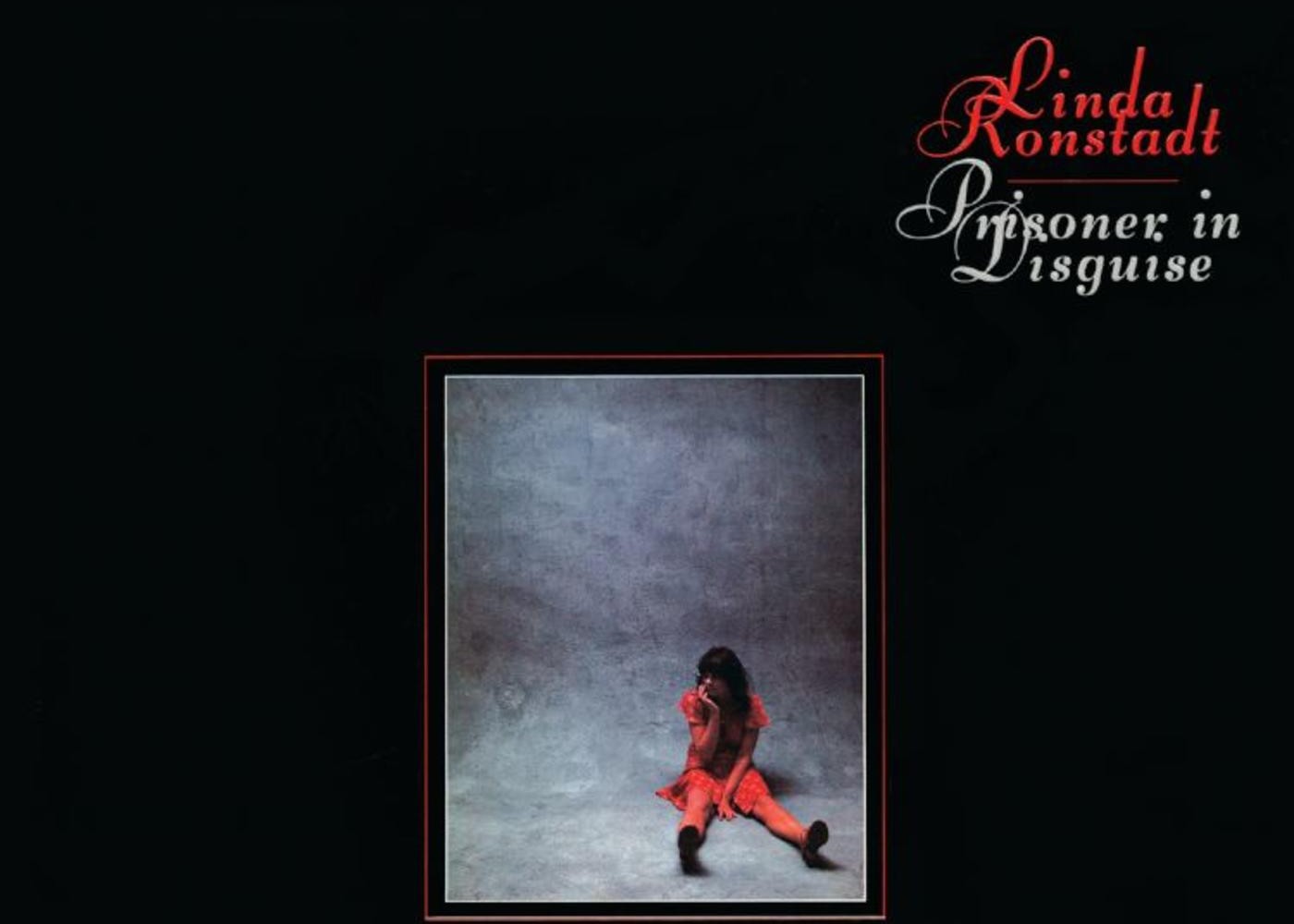
Composed of an excellent cross-section of her best material from the past few years, focused heavily on the above-mentioned album as well as its predecessor Don’t Cry Now, appearances like this one also provided previews of where she would be heading on the Prisoner In Disguise album (released in September this same year). Ronstadt sang with an unaffected demeanor accompanied by a tightly-knit ensemble as empathetic as it was polished: musicians including guitarist/keyboardist/vocalist Andrew Gold were eager and willing to supply musicianship redolent with all the same passion with which Linda herself engaged her audiences. The attendees this evening were repeatedly left agog by the deceptive intensity of the unassuming, diminutive figure out in front of the stellar complement of the combo.
Within the cozy confines of the Palace on this mid-winter night, Ronstadt tendered a near-perfect dynamic balance of songs. The juxtaposition of “Willin’,” written by the late titular leader of Little Feat, Lowell George, and “Colorado,” composed by Rick Roberts for the latter-day Flying Burrito Brothers, supplied evidence of Rondstadt’s early championing of the country-rock hybrid, as did the cover of Eagles’ “Desperado” (members of which band once played in the woman’s backing group a few years prior). Meanwhile, the delicate balladry of Anna McGarrigle’s title song for Linda’s aforementioned breakthrough record, combined with an earthy take on Martha & The Vandellas’ Motown chestnut “Heat Wave ” was indicative of Ronstadt’s eclectic taste.
Would the woman’s overall stage presence always match her musical virtues? Not wholly at ease with much between-song patter, her deadpan, tongue-in-cheek intro of “When Will I Be Loved” fell flat, despite–or because of?–the reference to “Kung Fu Fighting” (one of the best-selling singles of the period). That trivial faux pas aside, however, Ronstadt and the band were otherwise mutually inspired and, in turn, bonded as an integrated ensemble, not a singer with backup; the musicians found themselves taken with the chosen material plus the performance of the frontwoman, while she was spurred on as much by the unfaltering accompaniment she received as she sang the songs for which she obviously held so much affection.
Yet, through it all, Linda Ronstadt never engaged in any vocal histrionics. She did approach the threshold of yelling on “You’re No Good,” but never stepped over it, thereby retaining the tuneful quality of her phrasing and delivery. “Love Has No Pride” also reaffirmed Ronstadt’s innate ability to simultaneously express power and vulnerability at a time when feminism in pop was, as in the culture at large, still in its nascent stages: Linda’s rousing interpretation of “Silver Threads and Golden Needles” only cemented that impression left in yet another of the one-two punches that dominated the hour-plus set.
The combination of a hearty work ethic and prolific artistry earned Linda Ronstadt a revered status in the Seventies that’s unfortunately dissipated somewhat over the course of time. But that’s partially due to her purposeful efforts beyond the mainstream scope of pop/rock–in the fields of opera and the traditional Spanish music of her heritage–and also because she stopped performing somewhat unexpectedly in 2013 due to her affliction with Parkinson’s disease.
Due to sit-ins from opener David Bromberg, a slightly shorter concert two days later at the Capitol Theatre in Passaic, N.J. may possess a higher profile than this one north of The Big Apple. But it’s hard to imagine it could’ve been much more satisfying.
Comments
Loading comments...
Leave a Comment