
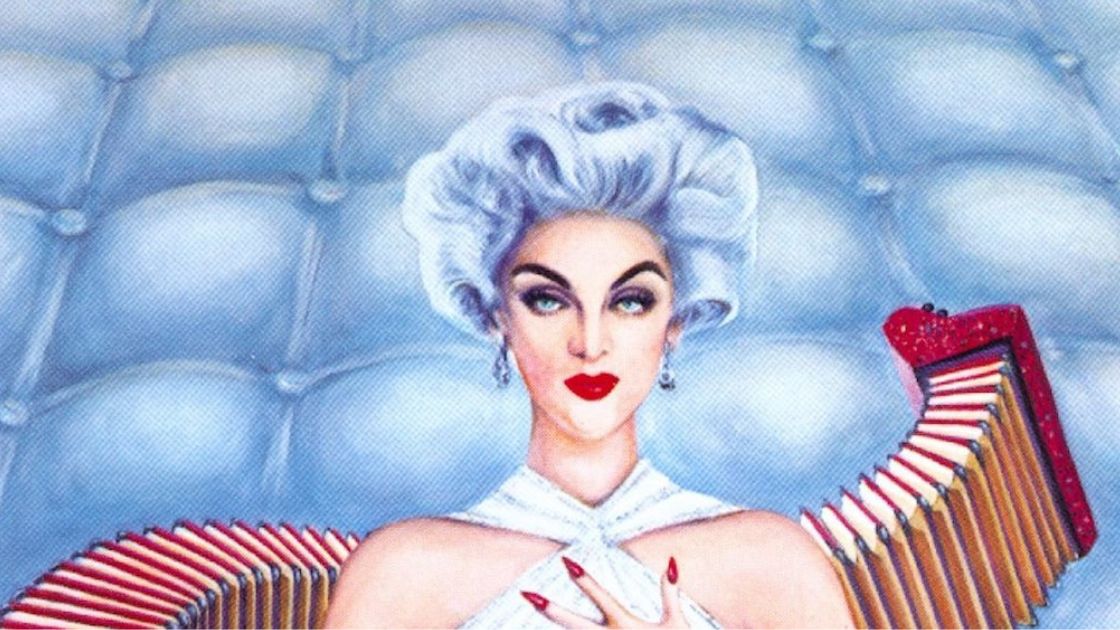
After two excellent albums as a quartet, duly applauded by critics but overlooked by the masses (despite yeoman’s work on the promotional parts of their Warner Brothers record label), Little Feat reinvented itself as a sextet for Dixie Chicken. It is in this configuration that the group gained the fame it holds today (albeit in one of many subsequently revamped lineups).
Upon the departure of original bassist Roy Estrada, the other founding members Lowell George, Bill Payne, and Richie Hayward aligned themselves with guitarist Paul Barrere, percussionist Sam Clayton and bassist Kenny Gradney (the latter two leaving Delaney & Bonnie and Friends to join these eccentric ranks). Produced by Lowell George–at the time Little Feat’s principal songwriter, vocalist, and guitarist–the six-man bond was remarkable in its unity. With a half-century hindsight now, it’s even more impressive how this record manages to feature the talents of all involved in accurate proportion to their contributions.
In the process of tightening up, the musicians imbued the newly-modified ensemble’s sound with an unmistakable New Orleans rhythm influence (more than a little reminiscent of the famed Meters) that rendered its quirky style as memorable as it was infectious. The title song stands as the archetype of the modified second-line approach, thanks in no small measure to Hayward’s deft touch, and it’s wisely sequenced as the very first cut of the ten on the album, its joyful impact ratified by the subsequent track “Two Trains.”
Yet even as both those numbers handsomely featured the virtues of the new Little Feat, including George’s unpredictable vocal phrasing and his equally distinctive slide guitar, Dixie Chicken doesn’t include another cut moving at much the same stop-and-go beat, with comparably comical lyric imagery, til the eighth selection. “Fat Man in the Bathtub” follows what is essentially a solo acoustic tune by Lowell, “Roll Um Easy,” then two-blues derived, ominous mood pieces in the form of “On Your Way Down” (composed by NOLA icon Allen Toussaint) and “Kiss It Off,” its arrangement dominated by dark clouds of the synthesizer from Payne. (Aside from “Apolitical Blues,” it is the only Feats tune of topical tenor, but this song, originally titled “Milk Toast Hitler,” has proven relevant across multiple timelines of American politics).
The latter also composed “Walkin’ All Night” with Barrere, the first of what would become a string of songs that are basically replications of Lowell George’s main style of songwriting, singing and guitar playing. The latter’s “Juliette” is something different, however, a combination cautionary tale/character portrait, delivered gently but firmly, via guarded understatement.
Recalling the sophomore album Sailin’ Shoes, its rootsy folk-rock strains constitute an ideal setup for the LP closer, an instrumental called “Lafayette Railroad.” A performance so mesmerizing it compels the question of whether it’s possible to play any more slowly and tantalizingly utilize a bottleneck (here in the form of the socket-wrench attachment George preferred), it is, in fact, like everything that’s preceded it, a denouement that displays a sumptuous range of audio dynamics in such a way the sonics mirrors Feat’s instrumental versatility.
Neon Park’s surreal cover art for Dixie Chicken radiated all the surreal humor of the music at its most off-beat. Like the images on the previous LP (and in a variety of future forms as well, inimitably suited to their respective records), it stands as the crowning touch to an oeuvre arguably more self-sufficient and distinctive as any contemporary band this side of the Grateful Dead.
Certainly, the loyalty of the Feats’ fanbase is compared favorably to the Deadheads community and for similar reasons. Followers of both institutions endured multiple personnel changes and, in the case of, Little Feat, the shadow of a split-up from internecine squabbling within the group afflicted much of its history following this record and into the self-referential Feats Don’t Fail Me Now.
During this period too, George’s tangible retreat from prominence was obvious through the album that followed, wryly titled The Last Record Album, an unstable state of affairs that also continued into 1977’s Time Loves A Hero (which included the quasi-fusion of “Day At The Dog Races,” which the one-time titular leader refused to play live).
The abiding faith in Feats then transferred to tracking group activities (of lack thereof) in the wake of George’s 1979 death right up until the present day’s regular recurrent tours and archive releases. The continuity therein, including tours marking the anniversary of the beloved group’s other defining moment, the concert piece that is Waiting For Columbus, should be no surprise, especially now with a half-century hindsight. This third Little Feat album is as durable (or more so) as any release of its time.
Comments
Loading comments...
Leave a Comment