
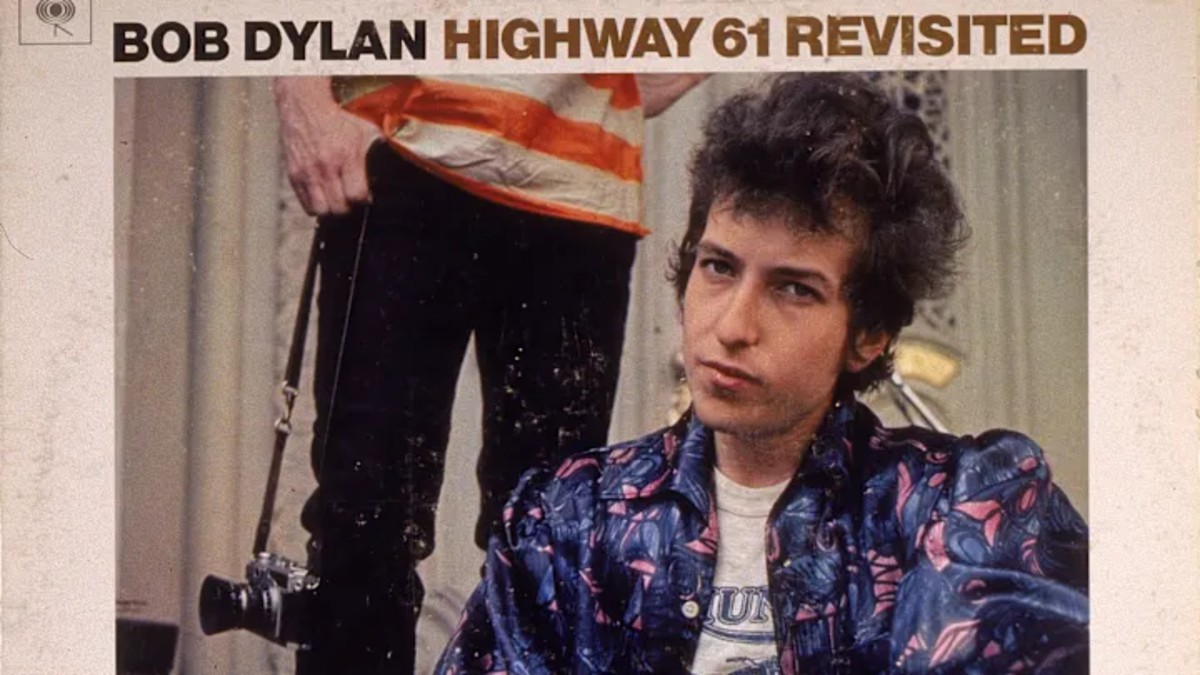
Bob Dylan didn’t exactly change the world with the slightly less-than-an-hour duration of Highway 61 Revisited (released 6/30/65), but around the time it came out six decades ago, it certainly seemed like he had, especially when broad hindsight focuses on the twelve months to follow.
Arriving shortly after its hit single “Like A Rolling Stone,” Dylan’s sixth album continued the confluence of events surrounding the folk-rock boom of 1965. The Byrds’ issue of their interpretation of Bob’s “Mr Tambourine Man” set the stage for the hybrid’s rise in popularity, upward motion further propelled by the author’s signature song almost exactly a month to the day later.
The dramatic crack of a drum, marking the beginning of that iconic performance, also made an ideal introduction to the album, where it was positioned as the lead track. Unflinching in its introspection, it is an indictment of celebrity and the inherent dangers of social climbing. “Like A Rolling Stone” sounded like nothing Dylan had done before.
As produced by Nashville expatriate Bob Johnson, after he took over from Tom Wilson–supervisor of the paradigm-shifting recording–the other eight tracks on the long player swing from hearty satire like the title song to a narrative populated with bizarre characters playing out absurd roles in “Tombstone Blues.” Then there’s the sly but scathing expressions of scorn within the stately “From A Buick Six” and more widespread disdain mixed with bewilderment throughout the eleven-plus minutes of “Desolation Row.”
The latter is notably anchored by acoustic guitars as a deliberate acknowledgment of the instrument’s scarcity on the preceding arrangements. And its compelling melodic changes, like those of “Queen Jane Approximately” (with its keening harmonica), are juxtaposed with blues progressions at the heart of “It Takes A Lot To Laugh, It Takes a Train to Cry.”
Whether the presence of guitarist Michael Bloomfield influenced the rootsy approach or whether Dylan chose this member of the Paul Butterfield Band because he acquitted himself so stylishly on the legendary Newport Folk Festival appearance around this time matters less than the economical performances of the session musicians.
As documented in David Dann’s superb 2019 bio Guitar King, Chicago native ‘Bloomers’ coached seasoned pros like keyboardist Paul Griffin and bassist Harvey Brooks, all of whom subsequently radiated an ease with the music and each other in the New York studio A of Columbia Records.
Apart from Al Kooper’s prominent organ part on “Like A Rolling Stone,” the confrontation with the metaphorical ‘Mr. Jones” on “Ballad Of A Thin Man” is the sole such passage on the LP. The only other recording from this period that sounds similar is “Positively Fourth Street,” recorded during the same string of sessions, it was released as a single in the early fall of ’65.
Bob Dylan’s Highway 61 Revisited is often misinterpreted as a drastic shift in style from his early folk years. But the fact of the matter is, the future Nobel Laureate simply continued the musical approach begun on Bringing It All Back Home, his previous album, released just four months prior. (Bob’s first electric studio foray was actually his 1962 single, “Mixed-Up Confusion”).
The meteoric ascension of Bob Dylan’s star crested with the 1966 release of the double album Blonde On Blonde. Shortly after that, the now-mythic motorcycle accident ended a frenzied and furious cycle of touring and studio work, after which Dylan would not return to the road for eight years (with those musicians he once termed ‘gallant knights’–The Band).
Six decades of perspective on Highway 61 Revisited reaffirms the line of demarcation in the arc of Bob Dylan’s career and stands as emphatic punctuation for what is arguably the most profound, not to mention prolific, period of his career.
Comments
Loading comments...
Leave a Comment