
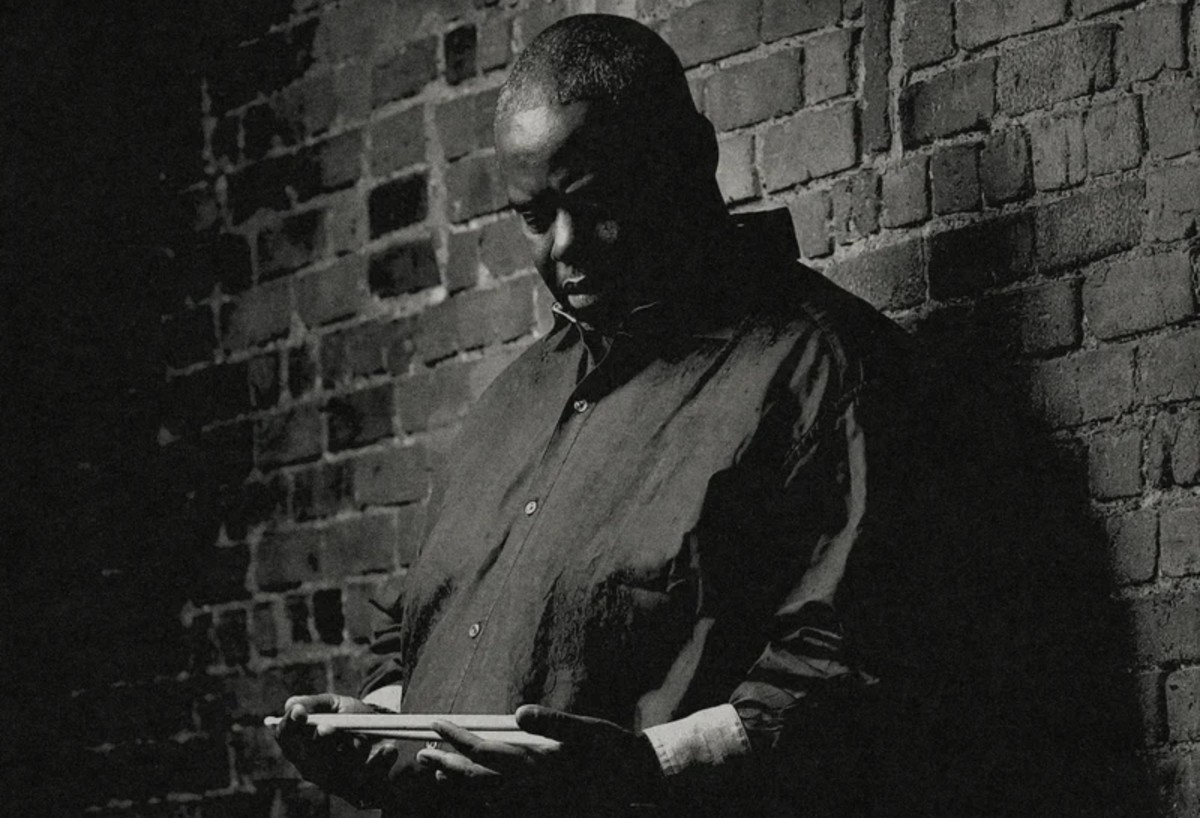
My Life Matters is the third Blue Note album from drummer and composer Johnathan Blake. A commission from The Jazz Gallery in 2017 inspired Blake to pursue a path of social justice through his music, as the title alludes to. While the album may not be as direct as Max Roach’s iconic We Insist! Freedom Now Suit; it raises the real issues and feelings that Black people endure today, which have only intensified in the intervening eight years. In one sense, this is not a thematic departure. The importance of family also courses through the album as it did on his two prior albums.
Unlike the first two, it does not feature Pentad but a new group of frequent collaborators playing both acoustic and electric instruments. They are: saxophonist/EWI player Dayna Stephens, pianist and electronics master Fabian Almazan, and Dezron Douglas on electric and upright bass for the core unit. Turntablist DJ Jahi Sundance and vocalist Bilal contribute on select tracks. The co-producer, along with Blake, is the label mate bassist Derrrick Hodge, who has a long tenure with Robert Glasper and also composes for television and film.
Rio Sakairi, Artistic Director of the Jazz Gallery (and the parent of Blake’s two children, as gleaned from the liner notes), who heard these fourteen compositions upon their conception, aptly titled many of them. Think of it as a musical suite, complete with interludes, that presents two opposing forces, the present and future, tragedy and hope, reality and conception.
We know immediately where the album is headed on “Broken Drum Circle For the Forsaken” when Sundance injects sounds of a radio dial tuning in concert with Blake’s drumming. We hear “We got pulled over for a busted taillight.” These were the words of Diamond Reynolds, who live-streamed the aftermath of Philando Castile’s fatal shooting by Minnesota police in an unwarranted, racially profiled traffic stop incident. Baker’s flowing vibes open “Last Breath,” as some may have guessed already, acknowledging Eric Garner, who died due to a police officer’s chokehold. His “I Can’t Breathe” helped define the Black Lives Matter movement and has been channeled in several songs since. Here, Stephens’ EWI and Almazan’s percussive piano provide the contrast to the gentle flow of the vibes. We later hear the same instrumentation in the title track with Douglas’ steady, firm acoustic, upright bass making the most declarative statement.
There are five other interludes where the titles say as much as the music. “A Prelude To An Unnecessary Yet Tragically Banal Oratorio’’ (Almazan: piano/electronics), “In a Brown Study” (Douglas: upright bass), “Can You Hear Me? (The Talking Drums Have Not Stopped)” (Blake: drums, cymbals), “That Which Kills Us Makes Us What?” (Stephens: EWI), and “Lullaby For An Eternal Rest” (Baker: vibraphone).
“Requiem for Dreams Shattered” features Bilal’s wordless vocals mingling with Stephens’ soaring soprano saxophone over a bed of vibes, piano, and electronics. The tone begins solemnly and grows angry, accompanied by Blake’s kit work, especially his cymbal flourishes and crashes. One of the album’s most arresting moments is “I Still Have A Dream,” featuring Blake’s daughter Muna reciting Sakairi’s poem, accompanied by Douglas on acoustic bass. Over a decade prior, she listed the names of those slain by police brutality on Ambropse Akinmusire’s Blue Note album, the imagined savior is far easier to paint. Blake’s son, Johna, also plays a role, with the brief electric bass solo alongside his current teacher, Douglas, on “We’ll Never Know (They Didn’t Even Try),” a somber tune colored by Stephens’ tenor over acoustic piano and subtle electronics.
The angular, dizzying “Always the Wrong Color” is a swirl of quotes from Sundance’s turntables meshing with the EWI, vibes, and turbulent electronics, which Stephens elaborates on in his interlude (see above). “Can Tomorrow Be Brighter” builds in intensity behind Stephens’ spirited tenor improvisations and Almazan’s highly animated piano playing amidst the upbeat rhythm section. The album closes on a serious note with Bilal vocalizing (like a wind instrument) over the stately piano in “Prayer for A Brighter Tomorrow.”
Given that this social justice suite was composed eight years ago, Blake reached a breaking point where he could no longer stay silent. My Life Matters is both deeply personal and universal.
Comments
Loading comments...
Leave a Comment