
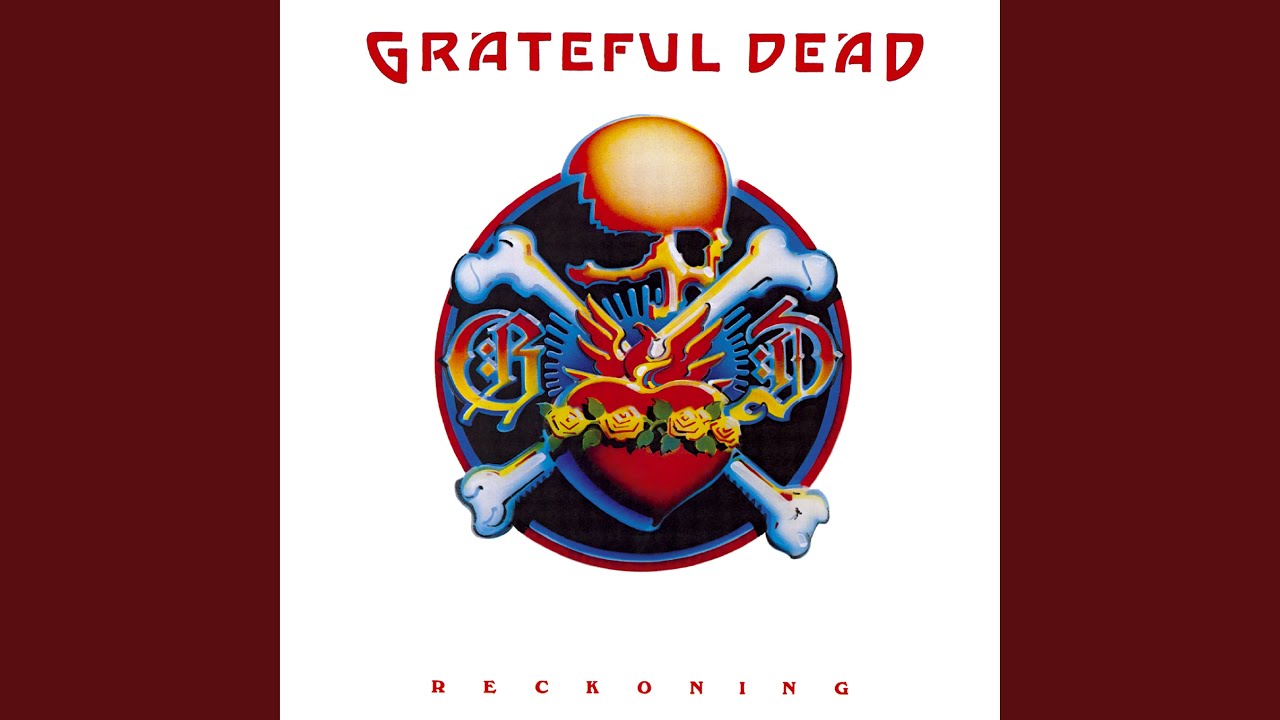
Now forty-five years old, the Grateful Dead’s live album Reckoning (released 4/1/81) is a prime example of the newfound inspiration the band experienced with the recruitment of keyboardist/vocalist/songwriterBrent Mydland. Recorded in the fall of 1980, some eighteen months after the keyboardist/vocalist/songwriter joined, this acoustic collection and its electric companion piece, Dead Set, were as close as the iconic band came to celebrating its fifteenth anniversary.
Contained in expanded form as part of the ornately designed 2004 box Beyond Description: Grateful Dead 1973-1989, a two-CD set illustrates how the Grateful Dead benefited from their reconfigured camaraderie. The multi-night runs staged in California at the Warfield Theater in San Francisco and at Radio City Music Hall in New York in 1980 capture their confidence and mutual comfort level.
So enhanced was this six-man alignment’s state of creativity that they were able to collate two separate sets of double vinyl LPs released the following year. In what may be the sleeper of that second massive box set, Reckoning compiles culls from the opening sets of those shows and presents an understated but hardly less authentic amalgam of material that depicts the Grateful Dead’s folk/country/bluegrass roots and how they utilized those influences.
On self-penned tunes that naturally lent themselves to the folk-oriented treatment (“Dire Wolf”), staples of the band’s electric configuration that translated fluently into superb acoustic jamming vehicles (“Bird Song”), some never-to-be-repeated rarities (“Rosalie McFall”), and a bunch of well-chosen covers (“The Race Is On”), the band is hearkening directly to their similarly-styled work of 1970, namely Workingman’s Dead and American Beauty.
The intricate mix of acoustic guitars constitutes a veritable mirror image of the group’s more prevalent high-volume approach. The arrangements gain further distinction through the astute accents from Mydland; his harpsichord on “Dark Hollow,” for instance, is a startling yet appropriate change of pace from the acoustic piano that underscores the otherwise traditional feel of these performances.
And, as with the exquisite sound of that same instrument on “China Doll,” Brent supplies further evidence of the unconventional spirit the man brought to the Grateful Dead throughout his roughly ten-year tenure with them. Enlivened accordingly, the rest of the band plays songs like “The Race Is On” with a combination of savvy economy and relaxed yet exploratory zeal.
In fact, a couple of left-field inclusions, in the form of instrumentals, add a jazzy, ethereal quality that contrasts with the barroom ambiance elsewhere while fortifying the intimacy of familiar choices like “Cassidy.’ “Heaven Help the Fool” is the title song of Bob Weir’s second solo album, while “Sage & Spirit” is part of 1975’s Blues For Allah, both of which enhance the pacing of the song sequence.
In addition, the vocal harmonies throughout Reckoning, though sparing on cuts such as “Ripple,” bespeak practice in group singing that this iconic band did not engage in as the Seventies wound down. The pristine clarity and definition of sound in Betty Cantor-Jackson’s recording, Dan Healy’s mixing, and Joe Gastwirt’s mastering capture the mix of voices, including Mydland’s soulful tones.
As noted in the aforementioned box, this second CD is longer than the content originally contained on two vinyl records. And despite the fact it does include some repeats from its companion piece, ”Deep Elem Blues” to name one, it also features cuts exclusive to its track-listing: “Iko Iko,” for instance, would subsequently become a fairly regular selection in the band’s latter-day repertoire.
Four and a half decades on, Reckoning still belies the melodrama of its title. Put simply, it stands as an ever-so-subtle reminder not only of how stable is the stylistic foundation of the Grateful Dead’s music.
Comments
Loading comments...
Leave a Comment