
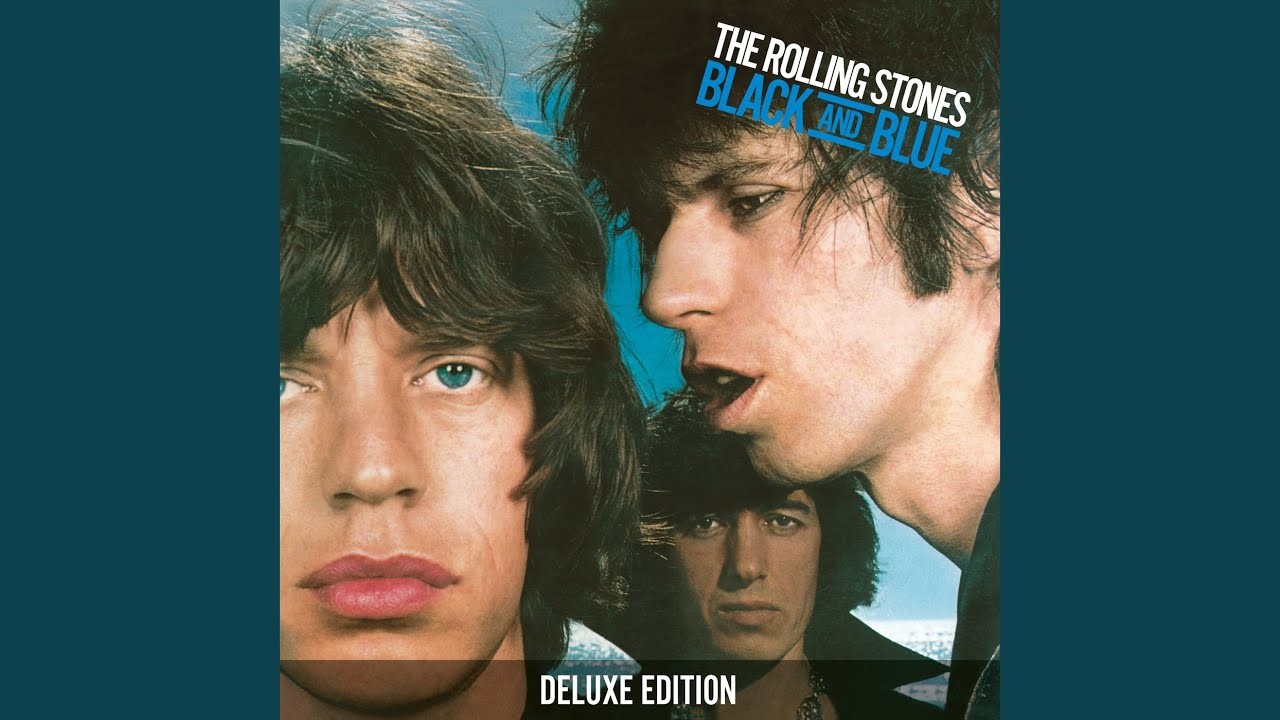
The Rolling Stones’ latter-day albums were frustratingly erratic long before the misconceived likes of 1997’s Bridges To Babylon. And the hit-and-miss designation applies even to those titles general consensus deems iconic: see 1968’s Beggars Banquet and Sticky Fingers three years later.
But, in marked contrast to those records–as well as Let It Bleed released upon the group’s return to the road at the end of the Sixties–the now half-century-old Black and Blue (released 4/23/76) is a patchwork album with a purpose, its eight tracks far more cohesive than the sloppy collage of salacious images on the outer cover.
Still, that artwork mirrors the fissures within the Stones as a unit at the time of recording the 1976 effort, beginning some two years prior. Schisms arose within the group after the arguable apex of their discography, Exile on Main Street, and fissures widened in the wake of Goats Head Soup and It’s Only Rock ‘n Roll. The departure of guitarist Mick Taylor was a natural extension of these fractures.
The sumptuous wealth of content within the late 2025 Black & Blue re-releases not only captures the essence of the Stones’ situation at the time but also the pragmatic means by which the group addressed their circumstances. The auditioning of new guitarists — including Jeff Beck, Rory Gallagher, Harvey Mandel, Wayne Perkins, and the eventual new Stone, Ron Wood — ultimately kept the core ensemble fresh as a means to parlay a variety of material.
In that regard, it’s more than a little amusing to hear the assembled assay culls from the former Yardbird’s watershed Blow By Blow, i.e.,”Freeway Jam.” (little wonder the late El Becko demurred on joining.) More to the point, though, the somewhat tongue-in-cheek Jagger-Richards original “I Love Ladies,” plus a high-energy take on disco stars Shirley & Company’s “Shame, Shame, Shame,” illustrates the band’s collective mind.
The underlying rationale behind this project, that is, reconfiguring the Rolling Stones as a band, is unmistakable in hindsight. So slight a song as it is, “Hot Stuff” vividly demonstrates the mechanics of the Stones. Therein, too, the piano from Billy Preston and Nicky Hopkins returns that instrument to the forefront in the arrangements. (Not coincidentally, both Jagger and Richards worked the ivories during these sessions).
Meanwhile, “Hey Negrita” is largely a rhythmic vamp and nothing more. Similarly constructed, the reggae-derived “Cherry-O Baby” clearly suggests that the songwriter team of Jagger and Richards—known as ‘The Glimmer Twins’ in their dual roles as producers here—relied more on craft than on creative inspiration at the time.
Still, the guitar-centric riffing of “Hand Of Fate,” like the rousing conclusion of Black and Blue that is “Crazy Mama,” betrays no lack of fire, instrumentally or vocally. And “Memory Motel” and “Fool To Cry” are both superior to some of Mick Jagger’s previous efforts in a soul/r&b-oriented style; the lead singer’s passionate delivery, as well as his restrained use of falsetto, conveys the emotional import of the lyrics.
Hearing the relative vigor in the official studio recordings, not to mention the ferocity of the musicianship in a live recording from their 1976 Earls Court show, bespeaks the Rolling Stones’ commitment to themselves as musicians and recording artists a half century ago. The group could ill afford to experiment much, an approach that foreshadows the enduring legacy the group drew upon for 2023’s Hackney Diamonds.
The first Rolling Stones album released in the wake of drummer Charlie Watts’ passing two years prior is marked by a tangible self-consciousness that undercuts both the swagger and the vulnerability inherent in the group’s best moments. As a result, those attributes become even more palpable with five decades retrospect on Black And Blue.
Comments
Loading comments...
Leave a Comment