
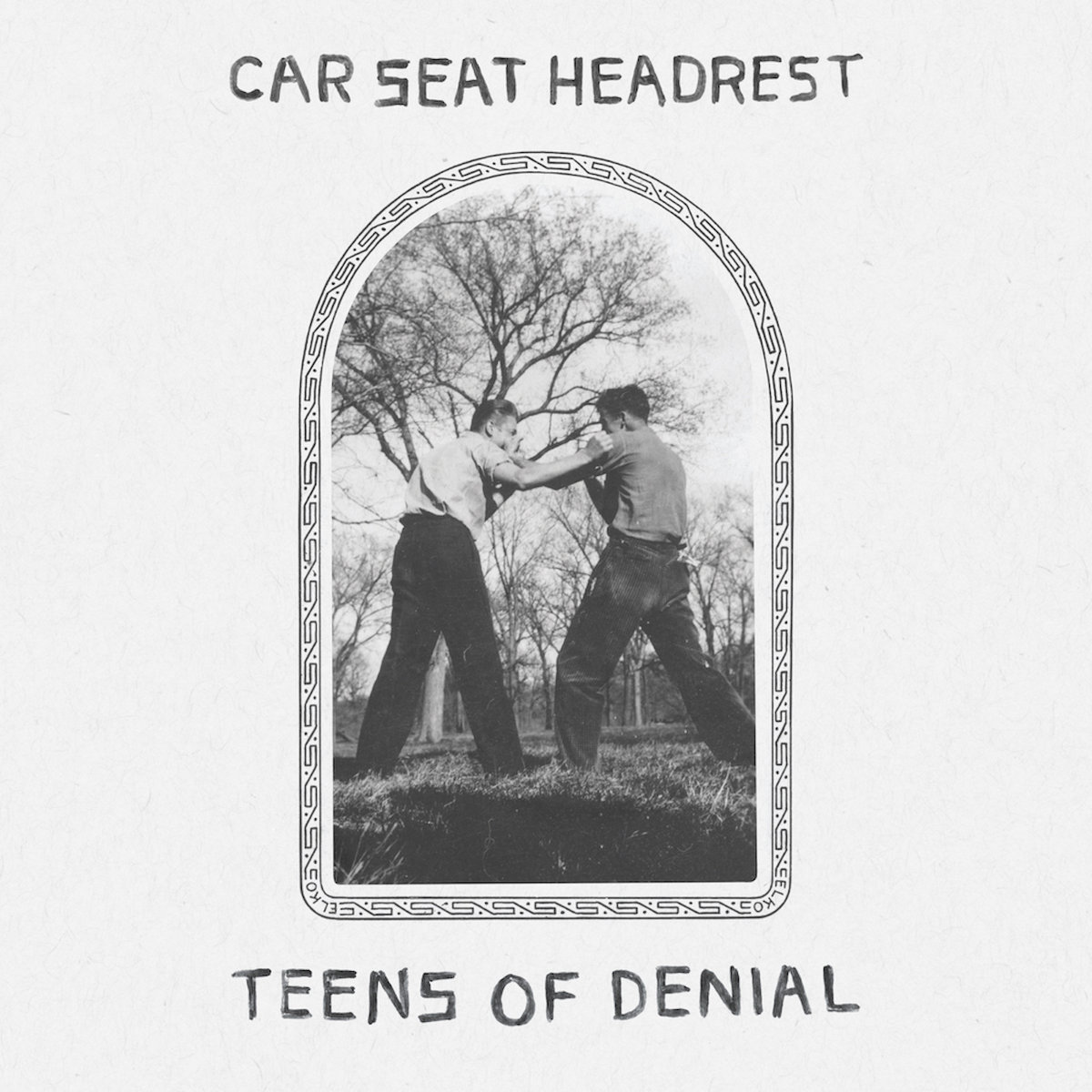
Stepping outside of yourself is sometimes the best way to discover something new. When one becomes too insular, the muscles used for self-analysis and decision-making begin to atrophy, leaving someone as a skeleton of memories and unheard thoughts that enter the void as soon as they enter the mind. One must look at the bigger picture and find themselves in it to properly evolve as a person, and artistically, one may need an outside source to encourage their lofty visions. Car Seat Headrest, the veteran indie rock outfit, took a few years to apply this thinking to their music, but once they did, a whole new dimension of the band’s sound was unlocked, and their career trajectory shifted drastically.
On May 20, 2016, Car Seat Headrest released Teens of Denial, their tenth studio album. These twelve songs not only represent a critical breakthrough for the band but also mark a collection of firsts for Carseat Headrest. Teens of Denial is the band’s first album made in a proper recording studio, their first collection of new material for Matador Records, and the first time they worked with an outside producer. By tapping producer Steve Fisk and leaning into their most daring ideas, Carseat Headrest landed on a warping yet digestible sonic terrain that, ten years later, stands as an essential listen for indie rock fanatics.
Along with plenty of behind-the-scenes shifts, there is a noticeable musical development occurring throughout Teens of Denial. Compared to previous Carseat Headrest albums, and despite the elongated tunes and cartoonish guitar riffs, these twelve songs acted as the band’s most accessible music to date. In place of constant electronic experimentation that resulted in discography highlights such as 2014’s How to Leave Town and 2011’s Twin Fantasy, Teens of Denial is an anthemic, grandiose statement from a band dedicated to growing.
That being said, Teens of Denial is far from a band sick of being underground heroes pining for some sense of commercial success. Songwriter/vocalist Will Toledo set out to write an album that would translate better in a live setting, one less reliant on bedroom manipulations and more considerate of others. This explains how Teens of Denial landed in the middle ground it has occupied for its first decade of existence, somewhere between risky art and commercial viability. The cathartic onslaught of the album’s opener, “Fill in the Blank,” takes the best parts of a moody anthem and filters them through fuzzy textures; the real-life story of Toledo’s drug experience makes for a fascinating story on “Drugs With Friends,” and the unpredictable emotions of “Cosmic Hero” all play into both sides of Toledo’s vision beautifully, detailing the line toed on this tracklist.
The balance Toledo and his band struck on their tenth studio album has become a blueprint for the indie rock bands that followed. You can hear how influential cuts like “Connect the Dots” and “1937 State Park” hold on the contemporary genre, with their angsty, abstract lyrics and dramatic swells. Ironically, in their pursuit of a more universal sound, Toledo penned some of his most vulnerable work to date, as seen on the heartfelt “Not What I Needed” and the longing-fueled “Unforgiving Girl (She’s Not An).”
Every nuanced risk on Teens of Denial paid off even more so than the band could’ve hoped for. The album landed on “Best of the Year” lists from the likes of NME, Mojo, and Pitchfork, all of which also gave near-perfect reviews of the album. Spin, Rolling Stone, and Vice all also had positive reviews of Car Seat Headrest’s tenth outing, highlighting the success of Toledo’s attempts at creating an album that is more generally accepted.
Teens of Denial achieved everything Car Seat Headrest set out to accomplish. Even with the small hiccup of having to recall the initial physical pressings after being denied use of The Cars’ “Just What I Needed” on “Not What I Needed,” Toledo and his band defied odds, challenged themselves, and created a modern indie rock classic on their tenth outing, a testament to Toledo’s innate prowess and the trust put into him and his wildest ideas. On May 12 of 2026, almost exactly ten years since Teens of Denial was released, fans began receiving copies of Teens of Denial (Joe’s Story), a remastered reimagining of the album, which is said to be made available digitally on May 20, 2026.
Comments
Loading comments...
Leave a Comment