
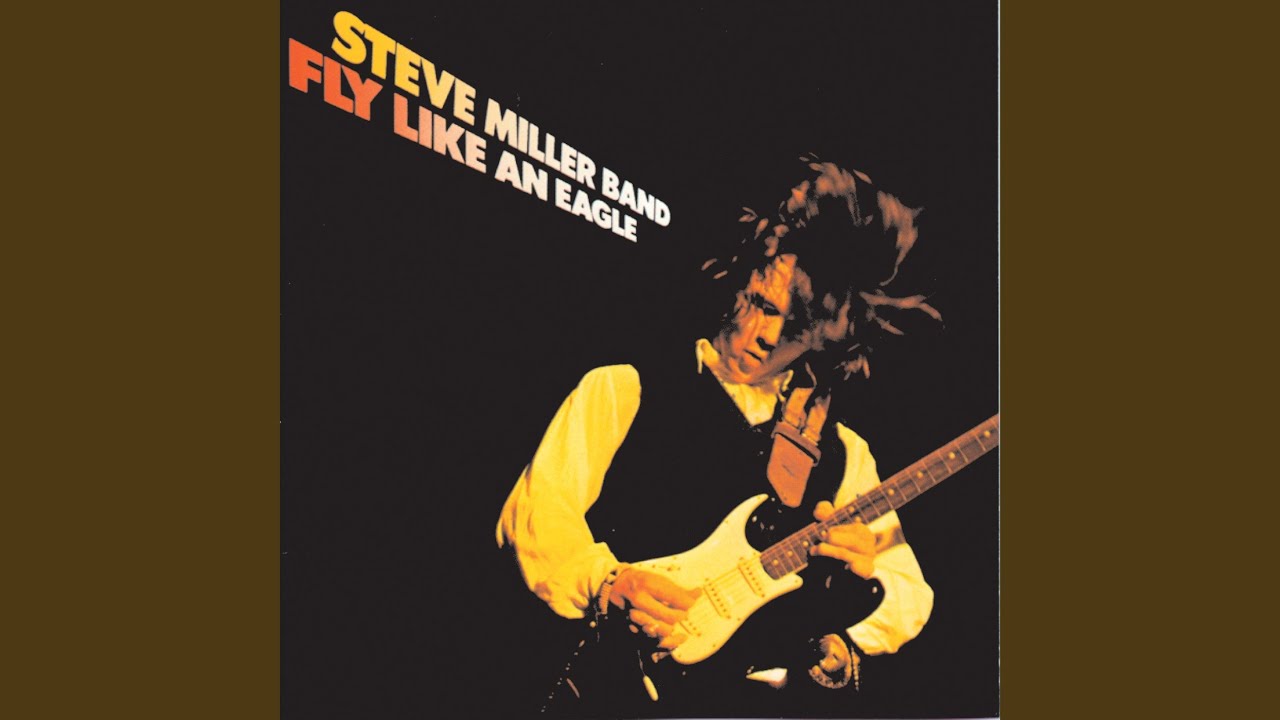
Hindsight certainly helps to appreciate Steve Miller's reflections upon his initial forays into sequencing the tracks he eventually separated into his two biggest selling albums. Taken together, the collection of recordings that would eventually take shape as Fly Like An Eagle (released 5/15/76) and Book Of Dreams seemed like a 'gothic nightmare' to the artist.From a more discerning perspective, these 1976 and 1977 albums echoed the stylistic mix of pop, folk-rock, and blues that marked Miller’s first real breakthrough from FM staple to mass popularity: 1973’s The Joker. Following extensive touring in support of that record (and some purposeful time off), Steve Miller instituted productive studio sessions with once-and-future SMB bassist Lonnie Turner and drummer Gary Mallaber.
Those core accompanists were eventually supplemented by a roster of savvy players, including one-time tourmate and blues icon James Cotton (most notably on “Sweet Maree”) and guitarist Les Dudek (who had played on the Allman Brothers’ biggest hit, Dickey Betts’ “Ramblin’ Man”). The results of these combined efforts took the form of the two dozen cuts that eventually populated the LPs.
But it’s to Steve’s great credit that he so judiciously assembled two track sequences that found favor with mainstream audiences. For instance, “Take The Money And Run” was just the first of four singles culled from the long player that led to 4-time platinum status for the now five-decade-old record. As evidenced by that selection as it appeared in demo form on the 30th Anniversary Special Limited Edition of the LP, Miller only flashed the guitar prowess so evident in the comprehensive anthology of 2019, Welcome To The Vault (see the excerpt from the SMB set at Monterey Pop in 1967).
Instead, he injected a smart gesture of contemporaneity into Fly Like An Eagle in the form of synthesizer work that was becoming increasingly fashionable during the Seventies. “Blue Odyssey” is just one such instance; the similarly atmospheric likes of which opened the album with “Space Intro” and, most appropriately, introed and concluded the interstellar narrative of “The Window” at the album’s end.
Interwoven between those numbers are sleek rock and roll (the title song and “Serenade”), reworkings of blues (“Mercury Blues”), and samples of nouveau gospel: a cover of Sam Cooke’s “You Send Me” emphasizes ‘the Gangster of Love’s aptitude for lush vocal harmonies. There’s even a touch of country in the form of “Dance Dance Dance,” featuring future Doobie Brother John McFee on dobro.
In his role as producer, Steve Miller ensured the sonics of the long player matched the polish of its musicianship and the craft of its songwriting. The over-obvious anthemic likes of “Rock ‘n Me” signaled there was no profundity to arise anywhere from Fly Like An Eagle, but like the best of its predecessors–all the way back to 1968’s Children of the Future and Sailor with Boz Scaggs in the band and Glyn Johns as producer–an infectious, good-natured attitude fully permeates the music.
The combination of those charms was irresistible upon the release of Fly Like An Eagle and remains so now half a century later. Together with the practical musical lessons Steve learned in the presence of musical icons such as T-Bone Walker and Charles Mingus–like his godfather Les Paul, visitors to his childhood homes in the Fifties–those attributes certainly stood the ‘Space Cowboy’ in good stead as he digressed into blues and jazz projects in later years.
Meanwhile, Steve Miller toured regularly over the years, drawing upon the accessible yet durable blend of fundamentals at the foundation of his now 50-year-old ninth studio LP, the title of which might accurately describe the arc of his career at that juncture.
Comments
Loading comments...
Leave a Comment