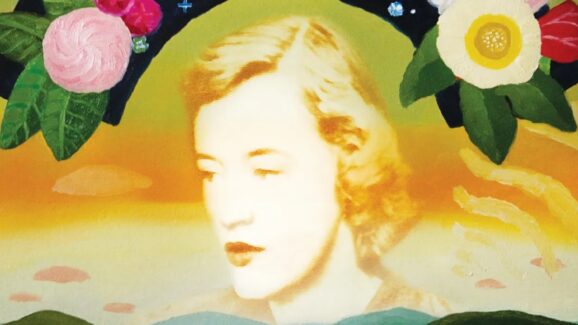
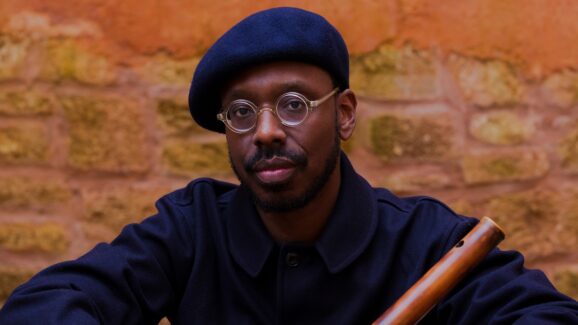
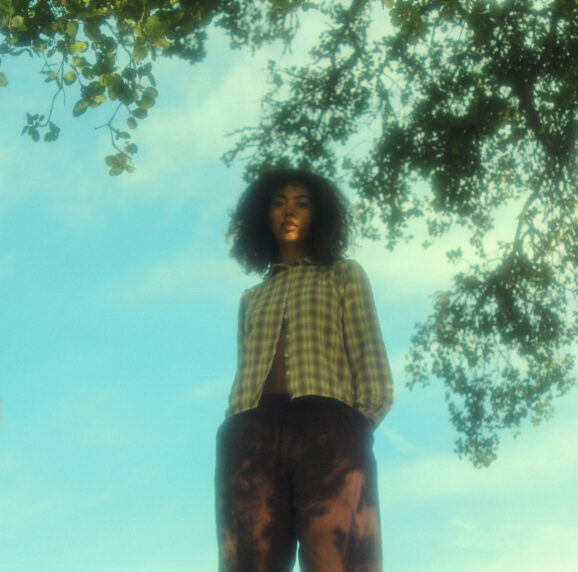
Ceylon Sailor’s debut album, Here We Lie, out June 27th, on boutique indie Stunning Models (The Fictionals, Will Stratton and Scheffer Stevens), is an exhilarating throwback meticulously crafted to adhere to lo-fi, chamber pop parameters. The album was recorded with only analog instruments; there are no drum edits; and everything that sounds like an electric guitar is an acoustic distorted within two inches of its life.
Ceylon Sailor shambles forward in the grand tradition of Neutral Milk Hotel, Pavement, Sebadoh, Superchunk, and Archers of Loaf. As a writer, KM is a painful optimist with a flair for the impressionistic rather than the linear, but he crafts lyrical passages that have a shared resonance.
The name Ceylon Sailor oozes a Pavement-esque wordy witticism. The “Ceylon” portion is the archaic name for Sri Lanka until 1972, and the full name is a tribute to the Beach Boys track “Sail On, Sailor” from its 1973 album, Holland. Nerdy details like this abound in the world of Ceylon Sailor.
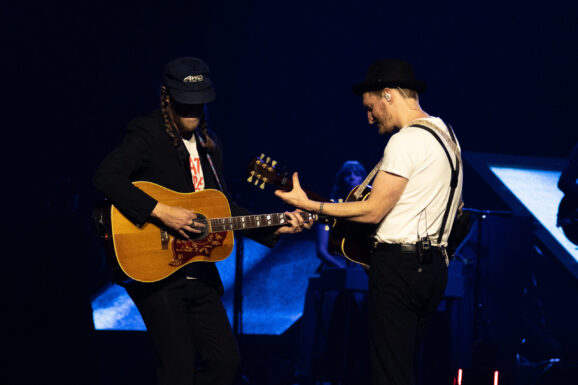
The quintet comes complete with 1990s indie-rock accoutrements. Members of Ceylon Sailor founded the cult Brooklyn-based indie-rock venue Gold Sounds. Here We Lie was recorded at the collaborative The Buddy Project recording studio in Queens, New York where studio owner/producer, and Ceylon Sailor producer/drummer Kieran Kelly has recorded some iconic indie albums, including Illinoise by Sufjan Stevens.
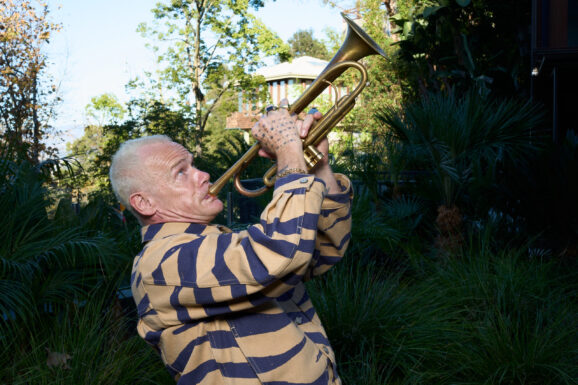
In addition to KM and Kieran, Ceylon Sailor is bassist Seth Ondracek, keyboardist and backing vocalist Andrew Wood, and trumpeter Dave Long. KM brought trumpeter Dave Long onboard because he once played a show covering in its entirety, Neutral Milk Hotel’s 1998 classic, In the Aeroplane Over the Sea.
KM wrote the majority of the Here We Lie songs while mired in pandemic introspection. “The album, and the band, were spurred on by the death of a friend from COVID-19, and a desire not to waste time. So, I set out to finish a large number of songs I had been warehousing,” KM says.
Today, Glide is offering an exclusive premiere of Here We Lie. For fans of indie rock and folk from the late 90s and early aughts, this collection of tunes is loaded with gems. Brimming with lush instrumentation that includes horns, banjo, synths, and more, each song feels catchier than the next as the band often switches from power pop to a straight rock sound, with plenty of stops in between. Harmonies and choruses are catchy, lyrics are intelligent, and the musicianship is top-notch throughout. All of this comes together to make for the kind of album that will make you yearn for those days when we seemingly got introduced to one cool band after another, where music could balance intellect and emotion to make for a cool sound. At the same time, Here We Lie does a fine job of making Ceylon Sailor stand out as more than just an act caught up in nostalgia and one that is fully capable of giving us fresh, creatively inspired music.
KM Sigel describes the inspiration behind the album:
Like many bands, we got this big shot of peri-post-pandemic creative energy and at the same time an intense amount of nostalgia, which for us was focused on the lo-fi-ish indie rock “golden age” of the late 90s. Every few years I fall into a deep obsession with Neutral Milk Hotel, and it happened to coincide with the writing and recording of this album. I think enough time has passed since they were active that hopefully our record won’t be seen as derivative but more of a love letter to them and the other Elephant Six bands. Thematically, ‘here we lie’ (the album) is largely a reflection on relationships (both successful and unsuccessful) but it also explores the importance of deep relationships during chaotic times, which have felt omnipresent in the last ten years. I think that all of the turmoil of the last decade has bred quite a bit of nostalgia (seemingly for the 80s and 90s) and this record echoes that longing—not just for a musical era, but for a time when things felt a little more intimate, a little more possible, and a little less frayed.
The basic tracks for Here We Lie were recorded last summer in Queens at the same studio where Sufjan Stevens made Illinoise—a space we’ve been working out of for several years. We spent the next six months carefully finishing each song, deliberately avoiding digital editing. At some point, everything passed through cassette tape to add extra texture and character. We think the result is something that stands apart sonically (for better or for worse!) from most of what’s making the rounds these days.
LISTEN: