
On November 08, in Los Angeles, the Rock & Roll Hall of Fame will hold their induction ceremony and finally the name of Bad Company will appear on the list of inductees. It’s been a long time coming for this rock band that formed from the bluesy ashes of Free. But here they will stand, just two now – singer Paul Rodgers and drummer Simon Kirke – as guitar player Mick Ralphs just passed away this June at eighty-one, and bassist Boz Burrell died in 2006, and let their music be recognized for it’s iconic sound that still resonates today, just as fresh and powerful as the day it thrust forth out of your 1970’s era speakers.
They belong here, amongst the others, the Stones and Zeppelin and Dylan, because they have been influencing just as many musicians and singers as those bigger legends. “Bad Company was the background music of an important period of my youth,” Slash said in a recent press release. And Dirty Honey’s Marc LaBelle seconded that by saying, “Bad Company are plain and simply one of the cornerstones of rock n roll. Their music has been a part of the soundtrack of my life for as long as I can remember.”
But before they walk onto the stage and say thank you to all their fans and peers, there is an album to newly acknowledge. A tribute called Can’t Get Enough featuring Slash, Blackberry Smoke, Black Stone Cherry, The Struts, Halestorm, Dirty Honey and several others, dropped on October 24th and it smokes with some faithful renditions and killer reinterpretations. Black Stone Cherry absolutely sets fire to “Burnin’ Sky” while Rodgers himself counts off Lzzy Hale’s female swaggering in “Shooting Star.” Although Rodgers and Kirke only appear in the background on a couple of songs, there is still that urge to pull out the old vinyl and listen to the originals in all their glory.
Whereas Bad Company was a rock band with blues influence, it was Free that got down and dirty in the blues, following the footsteps of Hendrix and Cream. “They were making it their own,” Rodgers told me in a 2013 interview for Glide. “I suppose Hendrix was almost like a psychedelic blues and Cream, well, that’s what it was in a way, psychedelic blues. And they took it off in a different direction. And I said to Paul [Kossoff], ‘That’s what we have to do: Take what we have now and write our own songs and find our own identity, basically.’ So it grew right out of the blues.”
Free’s biggest hit was 1970’s “All Right Now” from their third album, Fire & Water, but it wasn’t their only great song. “Heavy Load” from that same record is like a heartbeat slowly dying while “Mr Big” has the perfect cockiness; “I’m A Mover” digs deep into Rodgers and bass player Andy Fraser’s love of the delta; “Come Together In The Morning” gives homage to The Beatles with a seeping bluesy twist; and “The Stealer” drips with sass via Kossoff’s macho guitar licks. “That was a magical night,” Fraser told me about the latter song shortly before his death during our Glide interview. “Paul Kossoff was one of the greatest blues solo players you could imagine. It was all feel. He cried every note and when he played a solo, he was free, he would just go off.”
And Simon Kirke was their perfect rhythm keeper. He knew to play to the song and his strength was that he felt the passion in every beat of the song and refrained from showboating, like many of the drummers of the era. Playing with Kossoff in Black Cat Bones prior to the formation of Free, the London born drummer would segue into Bad Company with Rodgers around 1973, bringing in Ralphs from Mott The Hoople and Burrell from King Crimson. Their debut album contained a plethora of rock classics, from the ballad “Ready For Love” to the hard-driving “Rock Steady,” “Can’t Get Enough” and title track. Following hot on the heels was 1975’s Straight Shooter, 1976’s Run With The Pack, 1977’s Burnin’ Sky, 1979’s Desolation Angels and 1982’s Rough Diamonds before the original lineup disbanded. Despite the band reigniting in the latter 1980’s with a new singer and bass player, it wasn’t the same and the band would eventually come back together for highly successful tours.
I spoke with Kirke recently about Free and Bad Company, his drumming instincts and the magic of Mick Ralphs, while he was dealing with the effects of a nasty Nor’easter near his home in New York. Honest and jovial, you can hear in the man’s voice how much he loves his bands and the music they made together. But first, he had a little story for me after learning I am based in Louisiana.
“I don’t think you’re old enough to remember but Edwin Edwards [Governor of Louisiana at the time] made the members of Bad Company honorary sheriffs. We went to his mansion. I don’t remember much of that night cause we drank so much, but he was quite a character. I guess it’s probably elapsed now that he is no longer with us. But I have the certificate framed and it’s hanging in my studio.”
You still have your accent but you’ve been living in America for a long time, I understand.
Yeah, we moved here in 1997, which is twenty-eight years ago. It’s hard to believe. I first came over here in 1969. That was my very first show in New York. So I’ve played every major city in America at least a dozen times. But I am clinging on to my accent for dear life (laughs).
Where were you playing that first show? That was with Free, correct?
Yeah, we were opening for Delaney & Bonnie, a wonderful band, and Blind Faith, which was Eric Clapton and Steve Winwood, Ric Grech and Ginger Baker. We were sort of the cannon fodder, we got half an hour to play and when we first walked into Madison Square Garden, I’d never seen such a huge building in my life. It was our first gig ever in America. So it was quite an experience.
What was the crowd like, because they were probably waiting for Clapton, and here you guys come on.
(laughs) Well, I’ve always had an affinity for bands that would open for us, because of that memory. Number one, the stage was revolving. We had no idea that the stage revolved so some of our gear was left on the perimeter and got tangled up. And we only got to play twenty or twenty-five minutes. But I have to say, Blind Faith, even though they were touted as this supergroup, only played for about forty or forty-five minutes. And the very first show, there was a riot because twenty of those minutes was a drum solo, so in essence they only played for about half an hour and the place went nuts.
As we were leaving, this little band of mine named Free, we were walking back to the hotel, it was only a few blocks, no limousines for us (laughs), and there were, I guess, three or four kids, you know teenagers, who were sitting on the floor outside the door, and they’d left the gig in disappointment slash disgust because of Blind Faith. They said, “Hey, you guys were better than Blind Faith.” And I have never, ever forgot that, nearly sixty years later. It put such a spring in our step. And we toured America with that lineup – Delaney & Bonnie and Blind Faith – and we did shows all over the country.
I got to see America in the height of probably the most incredible decade of this country’s life, which was Civil Rights, Women’s Lib and Vietnam. We were witness to some incredible scenes in 1969. It was a nice transformative decade, I think, in America’s history, and musically as well, because we turned down Woodstock. Yeah, we were the band that turned down Woodstock. We were in New York, we had three days off and we were absolutely exhausted. My road manager came to me and said, “Listen, there’s this festival upstate but it’s going to be pissing with rain, we have to rent gear and it’s a four hour drive.” And we all said, “No, we’re not going to do it.” And that was Woodstock. But we did okay.
But you played the Isle Of Wight and that was a great performance.
Yeah, that was a breakthrough for us. It was England’s answer to Woodstock because Woodstock was such an amazing event, you know. No one was killed, very few drugs, maybe a bit of pot, well, a lot of pot (laughs), but half a million people and there was no trouble and it just showed that half a million, quote unquote hippies, could get together and have fun. So England decided to replicate that in England on the Isle Of Wight and it was a great show.
What do you remember about that experience?
Well, what happened, Leslie, was we were due to go on Saturday night, because we had the big hit “All Right Now” and we were sort of the flavor of the week as it were. So we arrived at the site around 6:00, we were supposed to go on around 8:00, by helicopter, and I’d never been in a helicopter before, and it was amazing. BUT, there was no control in the staging and the running and so on and so forth. So bands kept running overtime and by the time it came for our slot, which had now been moved to 10:00, we’d drunk a little, we’d smoked a little, we were pretty much out of it. And our manager, Chris Blackwell, said, “You’re not going on.” “Why, what are you talking about?” “No, you’re going to go on tomorrow afternoon at 1:00.” And it was the best decision he ever made because we were a little out of it, we were tired, and I heard that Sly Stone finished Saturday night at 4:00 in the morning, when everyone was just, you know, on the ropes. So we came in bright-eyed and bushy-tailed on Sunday around noon and we killed. The place went crazy, because everyone was well-rested and it was a bright sunny Sunday afternoon. So we were there for sort of two days as it were.
There was Hendrix, there was The Band and we all hung around for The Band because they were a huge influence on Free, and Dylan of course. But Hendrix didn’t come on until very much later that night and the helicopters were going back and forth to the hotel and as much as I really wanted to see Hendrix, I had seen him in England a few months before, but we flew out of there after The Band had done their set. Then the next day, or rather the next week, The Daily Telegraph had the picture of Paul Rodgers on the front page saying what an amazing success the Isle Of Wight had been, and to have Paul on the front page of one of the best newspapers in England was a huge caveat for us.
There is a new album coming out, a tribute album, with a bunch of great bands playing your songs. Can you tell us how it came together?
Quite honestly, Leslie, apart from me playing drums on one track and Paul singing background vocals on a couple of tracks, we didn’t really have much input at all. In fact, Primary Wave was the company that booked the band together and they acquired a lot of artists’ catalogs and so on and they came to me about six months ago and said, “Look, these bands,” and they ticked them off, “are interested in doing a tribute album to you.” And the only tribute album I remember, and someone might correct me, was The Eagles. A bunch of country artists and rock artists covered their songs. It was kind of a very high-class tribute to the band but other bands would take songs and cover them. So when I heard that there were a bunch of bands wanting to do Bad Company songs, I was very pleased, honored and flattered and so on.
But quite honestly, I didn’t really know, apart from Slash and Def Leppard, I really hadn’t heard of any of the other bands. But when they played me the album a few months ago, I went, wow! I was really knocked out. They’ve done such a wonderful job of covering our songs and injecting their own personality. It was great and I was very pleased and very proud.
Did one version in particular kind of surprise you?
Oh, yeah. I don’t have the list in front of me but the band that covered “Rock N Roll Fantasy,” The Struts, were great. That one really stands out. And Blackberry Smoke.
There are four songs from your debut album on the tribute record. What was the vibe like in the studio when you recorded that first Bad Company album, especially after coming off the chaos of Free and Paul Kossoff’s deterioration? Were you guys nervous about this, was it relief?
What a wonderful question. You’re the first journalist, I think, to ever bring that up in hundreds and hundreds of interviews and I tip my cap to you, madam. The short answer is it was liberating. We were like four greyhounds let out of the trap once that rabbit comes around the circuit. We had been rehearsing and rehearsing for weeks and months and months and months. We got the nod from Peter Grant and Swan Song Records and he wanted to manage us and be the first artists on Swan Song. We finally got our bass player, Boz Burrell, and just out of the blue Peter called Paul Rodgers and said, “Listen, Zeppelin have to take a week off because John Paul Jones has the flu. There’s this place called Headley Grange where all the gear is set up, you just have to put your gear in and are you ready to make your first album?” And we said, “Absolutely.”
We shot down there and we recorded the actual tracks in about three or four days and the mixing took another three days. And you know what it was, Leslie? We were just on a high, because, as you’re correct, we left the debris of our three former bands behind us. We were in our mid-twenties, we were full of piss and vinegar, we just couldn’t wait to get started. I believe the very first song we recorded was “Can’t Get Enough.” And when we went into the Rolling Stones mobile, this little airstream caravan with sixteen track, and we heard that first song come back, oh my God, we were elated. We were pretty much on a high for the rest of that week. It was a one-two punch, it was a perfect storm, with the weight of Zeppelin behind us and this wonderful manager, Peter Grant. I mean, we still had to open up for big bands when we toured the US. We weren’t a shoo-in by any means so we had to sort of prove our mettle. But at the end of the tour we had platinum albums. It was a year I’ll never forget. Wonderful.
“Weep No More,” which you wrote and should have been a part of the tribute record but wasn’t.
Yeah, I love that. When I first brought it to the table, I was kind of like, oh God, I hope they like it. Oddly enough, I was listening to it only yesterday, the original version with the strings and the orchestra and Mick’s playing and Paul is singing. I was so proud of it when it came out and I do it in my solo shows. I always play that. People always like to hear that one and I’m very proud of that one.
You’re not an extravagant drummer. You seem to feel every beat of the rhythm, nothing is dispassionate in your playing. Have you always been that way or did it take some playing to get that way?
Yeah, it’s not my style to be complicated. I back the track. I’m a huge fan of Ringo Starr, who lays down this rhythmic foundation for the other members. Levon Helm from The Band, another huge influence. And Al Jackson Jr was my number one influence, who just played a simple steady beat. I remember Stewart Copeland years ago at a drum clinic, he sat down at the kit and he played about sixteen bars (mimicking sound) bom, bom, tsk, bom. He did that for about a minute and he said, “That is the hardest groove, the hardest thing for a drummer to do.” In a strange way, he’s right, because there is a tendency to show off and get bored with what you’re doing. But one look from the guitarist or the vocalist in front of you to just say, “Hey, be careful, this is not what it’s about,” and Free taught me that and Bad Company taught me that. I’ve never aspired to be Terry Bozzio or these wonderful drummers, Dave Weckl or Vinnie Colaiuta, who plays with Sting. But that’s not me. I’m there to be part of the song, to lay down a rhythmic foundation. And it helps that I play guitar and piano. I’ve been doing that for as long as I’ve been playing drums so it gives me an idea of what is required of me as a drummer.
Which album, by either Free or Bad Company, from top to bottom, do you feel you were on point and locked in at your highest potential as a drummer?
Wow, I would say from Free it would be the second album, Free. I know Fire & Water came third and “All Right Now” was on that, and if I could lump those two together, it would be Free and Fire & Water. But the second album by Free, called Free, showed us as a band that had traveled all over Europe, we’d been to America; we were a band, a cohesive band, rather than four guys who’d just gotten together for the first album. We had this sort of glue between us. The same goes for Bad Company. The album that I really enjoyed the most was Straight Shooter, the second album, and if I could just sort of pinch a little bit of Pack, the third album. So yeah, Straight Shooter from Bad Company and Free, the second album by Free, showed me at my most enjoyable.
Since you brought up Free and Fire & Water, I wanted to ask you about the song “Heavy Load.” It’s like this slow heartbeat blues but it goes into this surreal space as the song goes on.
At that time in Free’s career, for the first time in my life, I was dealing with addiction; not me personally, although I am quite happy to tell people that I am in recovery and have been for many years. I’m in AA and I don’t mind telling people. But back then, I believe “Heavy Load” was 1970, and I was twenty-one and Paul Kossoff had started taking these things called Mandrax, which is similar to Quaaludes, and he was getting very sloppy and very out of it and he’s still very young, and it started to affect the band. I might be speaking out of turn, I’m sure Paul Rodgers could set me straight, but I think this song alluded to him and it was a very sentimental song, dripping with sentimentality and love for Paul, and followed hot on the heels by “My Brother Jake,” which was Andy Fraser’s tip of the hat to Paul Kossoff. But “Heavy Load,” with this wonderful piano, which I think set the tone, set the mood, and this sort of wailing, mournful guitar that Paul Kossoff supplied. I’m almost getting emotional thinking about it, because no one has picked out that song and held it up to me and said what do you think of that. It’s one of my favorite Free songs, no question.
What did Koss think of the song when he first heard it? Did he realize what Paul and Andy were trying to get through to him?
Although he never mentioned it to us, it was a sad song about a guy who is sinking and no one in our circle of friends at that time had a problem except Paul Kossoff. So the dots are joined.
And Andy is playing piano, correct?
Yeah
And he was another one who sort of began to spiral out of control and that’s sad to see because he was such a great songwriter.
He was a great songwriter. He was a little bit of a pain in the ass quite honestly and I mean that kind of fondly, because he sort of took the reins from the business point of view and he was the youngest. But there was a certain quality about Andy that was very dictatorial and it stirred up a little bit of resentment between the other three. Now, that aside, he was an amazing songwriter. He was the first one to play piano in the band and he came up with these lovely songs, and he was a most incredible bass player. Andy was a bit of a conundrum, cause as I said he was a wonderful player but every now and again he would say, “You should play this, play it like this.” And when you’re a musician and you’re trying to find your own footing, when someone says, “Try it like this” or “You should do that,” it puts my back up.
So I have fond memories of Andy and I tip my hat to his talent but he was a bit of a loner and I think instrumental in the breaking up of Free in the first place, because what happened, in a quick thumbnail sketch, was we couldn’t follow up “All Right Now.” We were very young, still only in our early twenties, late teens, and the follow up to “All Right Now,” just fell flat, as did the album Highway, it fell flat and didn’t even chart. So we were left kind of spinning in the wind and the management should have given us some time off. And they didn’t. And Paul and Andy said, “You know what, we’re going to break up the band and move on to other things,” because at the very first hurdle, we fell flat and it really was a blow in the face for Paul Kossoff, particularly, who loved Paul and loved the band and without that band he really did spiral out of control.
But anyway, I’m not knocking Andy, I’m just really telling the truth. He was a great guy and a wonderful musician but he did have that little chink in his armor that put your back up and it certainly put mine up.
What did Mick Ralphs bring to Bad Company?
Ahh, lovely Mick. You can tell by the tone of my voice, I really loved him. You know, BB King said a great thing, and I’ll try to paraphrase it, he said, “I don’t like working with geniuses; I like to work with people I like, because that brings a lot to the table and I’ve worked with geniuses and they’re a pain the ass.” Mick had the whole package. He was a great guitarist, funny, kind, gentle; he was just a lovely guy. Whenever he walked into the room, the mood lightened. That’s the best I can say about him. You knew what sort of Mick Ralphs was walking in (laughs).
What was he like in the studio? Did he have a lot to say?
He deferred a lot to Paul. You know, Paul has this very, not aggressive but had a very forward-moving way of thinking, and “I like it to be done like this,” and ninety-nine times out of a hundred, he was right. He was the leader and always has been, and that’s fine with me. Mick was the perfect sidekick. He was David Bowie’s Mick Ronson, he was the sidekick who you could depend on for a joke, you could depend on him to play an amazing solo, come up with an amazing riff, and he wrote great songs. I mean, “Ready For Love” was one of the best songs ever written. And he was a dear friend and I miss him and I always will.
And he was able to know Bad Company was going into the Rock & Roll Hall Of Fame before he passed. I’m sure that means a lot to all of you.
Yeah, as each year came by, rolled around, and we were not on the nominations, and then when he had the stroke, it was oh God, please, please, before he goes, please. That was seven years of hell and then we finally found out last October that we were nominated and then in February we got the call that we were going to be inducted. And Mick passed away a few months later. We were so happy for him.
In your opinion, what did Bad Company have that maybe other bands didn’t that made your music last all these years?
I don’t know. I mean, I do and I don’t. Leslie, I’ll tell you what happened. At that time, 1973 when we first got together, glitter was everywhere. Bowie aside, Bowie was a wonderful guy and an amazing talent, but before he became the Thin White Duke, he was in the ten inch high heels and the glitter and the makeup. Gary Glitter, T Rex, Sweet, it was all very much glitter and glam. Glam rock ruled. When Bad Company was formed, we wanted to sort of be antithesis to that, just wanted to be a rock band. Blues was our, certainly me and Paul Rodgers, primary influence along with soul. Mick brought along rock & roll. Boz was more of a bit of a Jazz guy, not an out and out rocker. So we had this sort of mixture of sounds. But what we wanted to do was cut through all the glamour, certainly no mascara on our eyes, and we just wanted to be a straight ahead blues rock band with simple solid songs.
What song that you’ve recorded was the most difficult to get right in the studio?
Oh God, now I’m going to appear big-headed (laughs). Actually, I was going to say “Run With The Pack” because there’s two time signatures. But I think “Burnin’ Sky,” because “Burnin’ Sky” has this sort of little hiccup in the verses and Boz, the bass player, was the one who came up with the idea. And it was a bugger to get right, until we came to the choruses when it came to regular time. So there were quite a few miscues and missteps in “Burnin’ Sky” but when we finally got it right, it was great. Also, “All Right Now,” was kind of hard because that was some sort of three sections. Believe it or not, we took that number, I think, twenty-four times with stops and breakdowns. I believe we used tape number six. But that was a hard song to play because it was sort of in three sections. So “Burnin’ Sky” and “All Right Now” were kind of mothers to get right (laughs).
What did you think of Aynsley Dunbar?
Oh wow! I’m glad you brought him up. I never really sited him as an influence per se but I was always a huge admirer of his playing. The thing about Aynsley is that he could turn his drumsticks to any style. I believe he is the drummer with the most sessions ever. He’s played with so many bands, and he’s probably pushing eighty now, but he was a great drummer. He used to do solos. I used to go and see him when he was in a thing called Aynsley Dunbar’s Retaliation. He had his own band with Victor Brox and every Monday night we would go, or I would go, to the Marquee Club in London and he would do these blinding solos. He was so good. But like I said, I wouldn’t site him as an influence but I am a huge admirer of him. And that goes for a lot of drummers but who influenced me would be Al Jackson Jr, Ringo and Levon Helm. But I am so glad you brought him up because I would wave the flag for him any day of the week.
Who was the first real rock star you ever met?
Ooh, I would have to say Keith Richards. I knew Ronnie Wood very well from when Free toured with The Faces. Then when he joined the Stones, Ronnie was hanging out at my house in London and would come in with Keith Richards, this sort of pirate looking guy. It was a bit of, ooh, who IS this guy? But then he picked up a guitar, and I have this little shed at the bottom of the garden which should be enshrined in rock history because we had a lot of famous people playing there (laughs). But Keith started playing and I said, oh my God, this guy is amazing. But I would say generally the first rock star that I ever met, it’d be Keith Richards.
What is going to happen now: this record is coming out, everybody is thinking about Bad Company, the Hall Of Fame. What do you have on your plate?
Sad to say, Bad Company is no longer. You know Paul had his health problems and we all have to have our sunset sooner or later. So it’s safe to say Bad Company won’t be around. But I’m involved in a rock opera called Rock Bottom about addiction, which I’ve written the songs with Woody Giessmann, a very good friend of mine, an interventionist and a solid member of AA. We’re working on the script, the script is pretty much finished, and it’s a love story between two addicts. One gets sober and the other one doesn’t. It’s kind of heartfelt. That’s my main project right now but I’m also getting into film scoring, cause I’ve always been intrigued by music that goes with film. I’ve taken a couple of courses and got me some certificates and very much like to get into that. I’m always writing songs by myself or with other people. I’ll probably do another solo album, I’ve done three. I love writing songs and that’s where I am right now.
I interviewed your daughter Domino back in 2017. What are your girls doing right now?
Well, she just gave birth to twin boys about five months ago. She is happily married to Penn Badgley, who is a great guy, love him very much. Lola, apart from being a gifted actress, she’s now a singer-songwriter. She spends most of her time in Nashville and she does shows. Jemima has left acting for the moment. I hope it’s temporary. She’s at home with her lovely kids, her son and her daughter, and she’s put acting on the backburner for a while. But, thank God, they are all healthy and that’s all any parent wants, isn’t it.
What do you hope your grandkids will remember about you most?
Oh God, now I’m going to get all weepy (laughs). But yeah, I was a cool grandad. I played good drums and I was a cool grandad. That’s good enough for me (laughs).
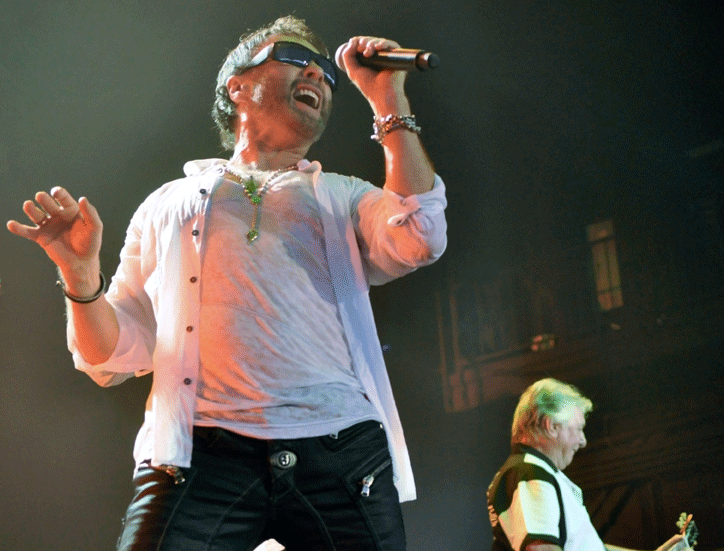
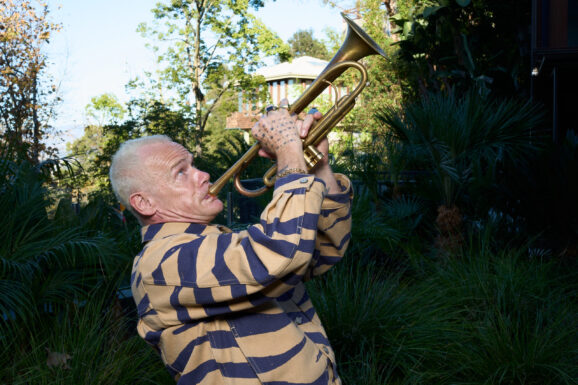
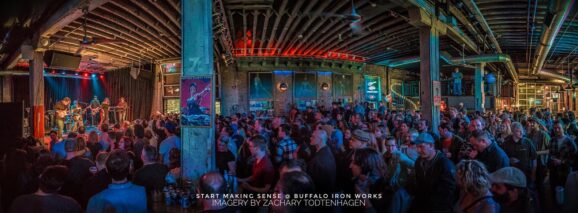
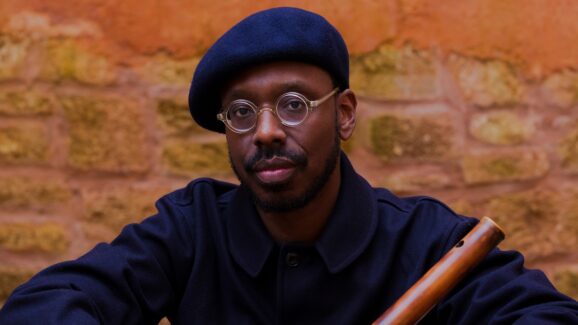
Portrait by Ian Dickson; live photos by Leslie Michele Derrough

One Response
I’ll definitely be pulling out my old Bad Company vinyl after listening to this tribute album. It’s a great tribute to Paul Rodgers and Mick Ralphs!