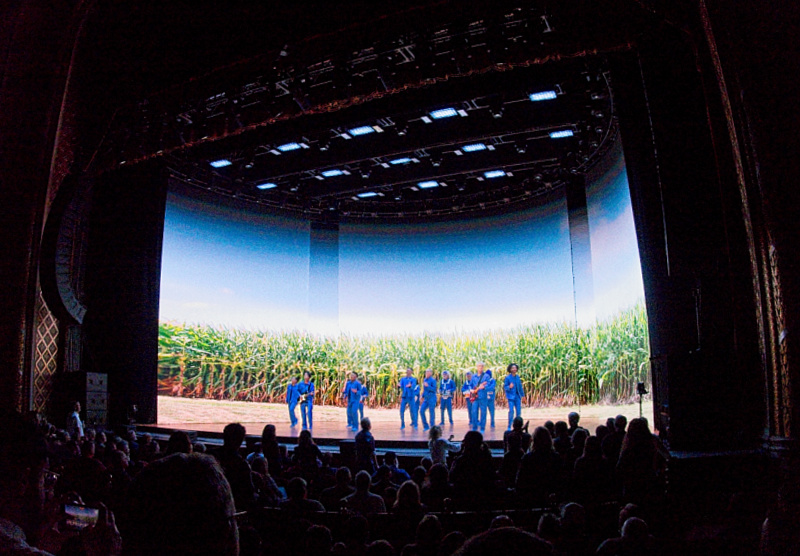
The curtain rises not on a stage, but on an empty slate—a bare, gently curved floor backed by a massive, seemingly uninterrupted video screen, giving the immediate impression that David Byrne’s Who Is The Sky? Tour is less a rock concert and more a carefully orchestrated piece of immersive theatre. Having established a new standard for touring performance with American Utopia, Byrne returns with a show that is both structurally familiar and visually reinvented. This production supports his recent album, Who Is The Sky?, and it delves into themes of community, connection, and the sheer strangeness of human existence, all delivered with the joyful, relentless precision that has defined his late-career renaissance. What follows is not merely a collection of songs, but a fluid, two-hour meditation on movement and sound, held together by the wry, inquisitive presence of its seventy-three-year-old maestro.
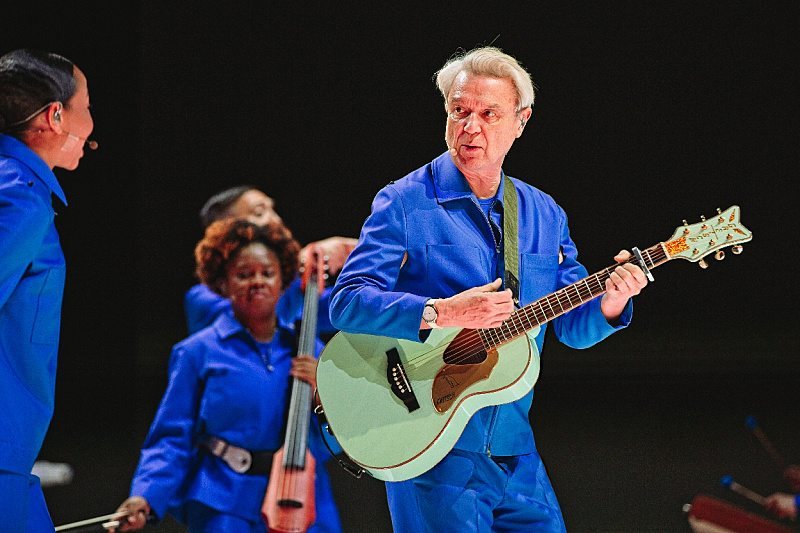
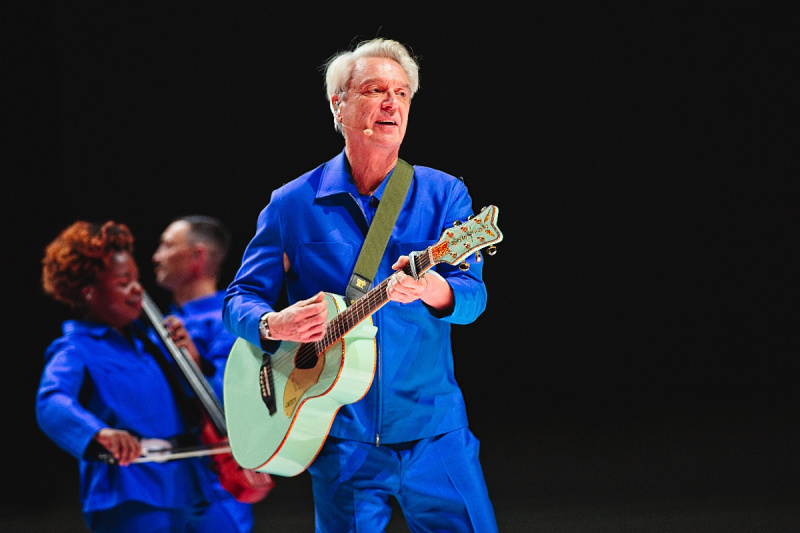
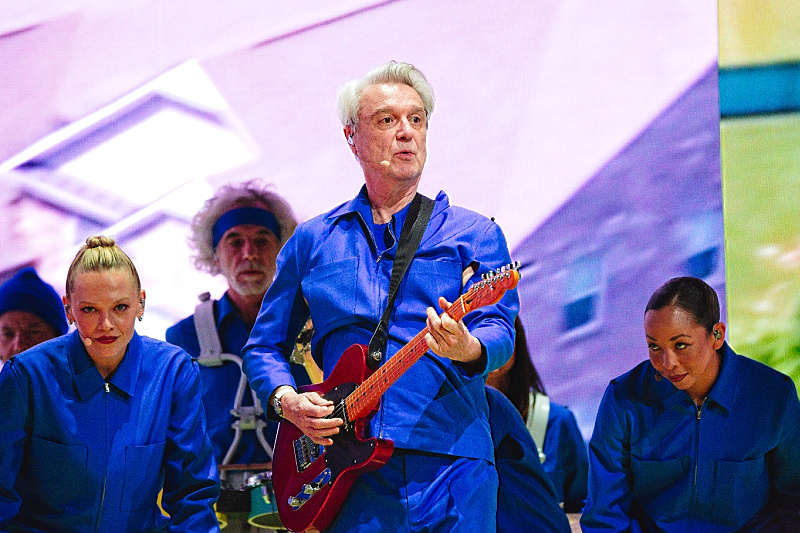
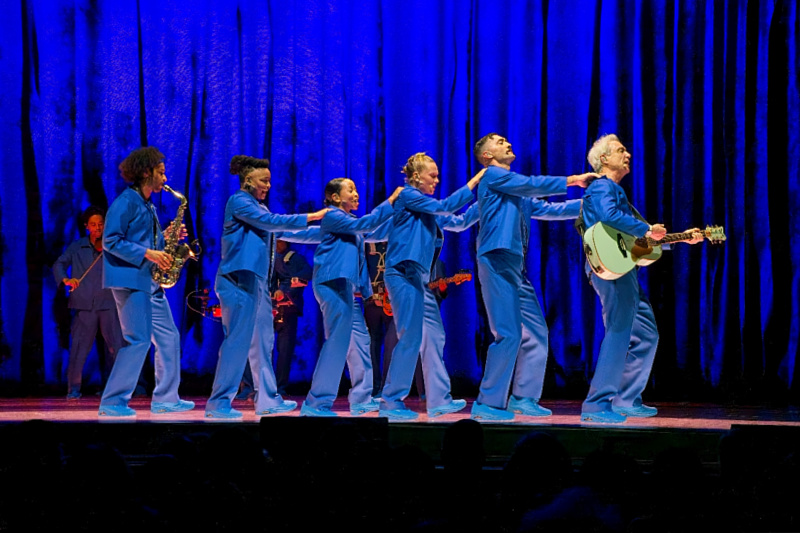
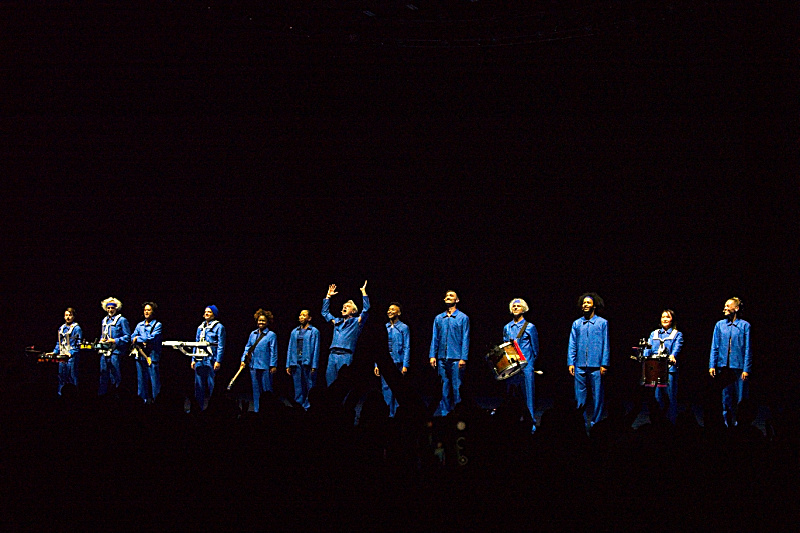
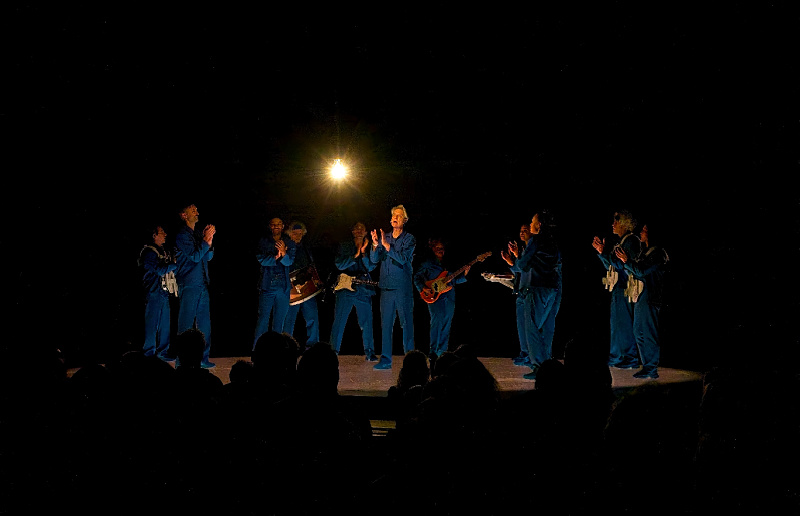
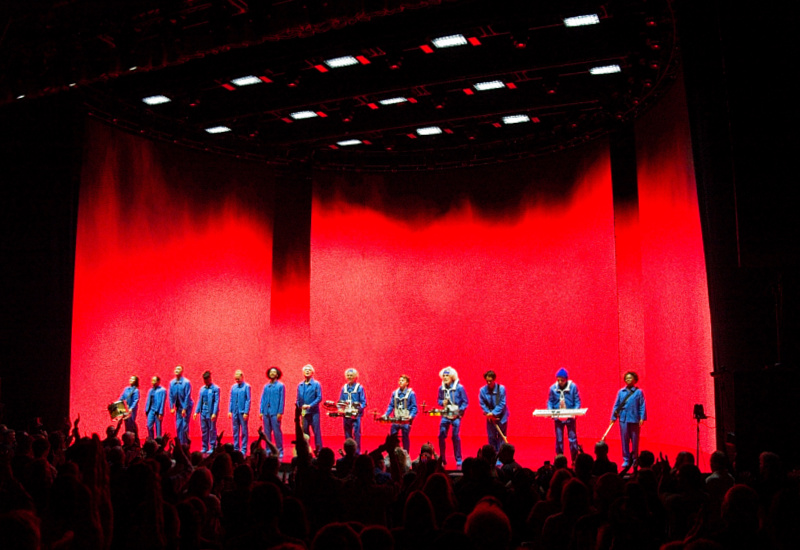
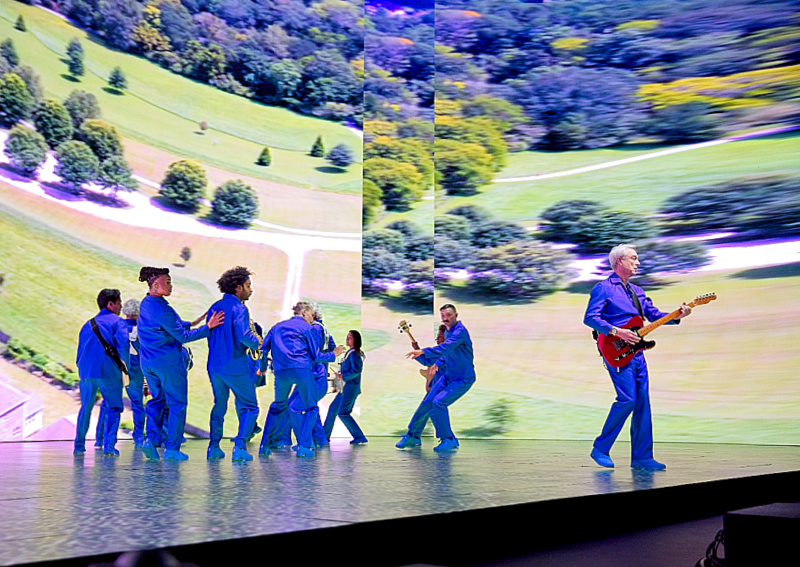
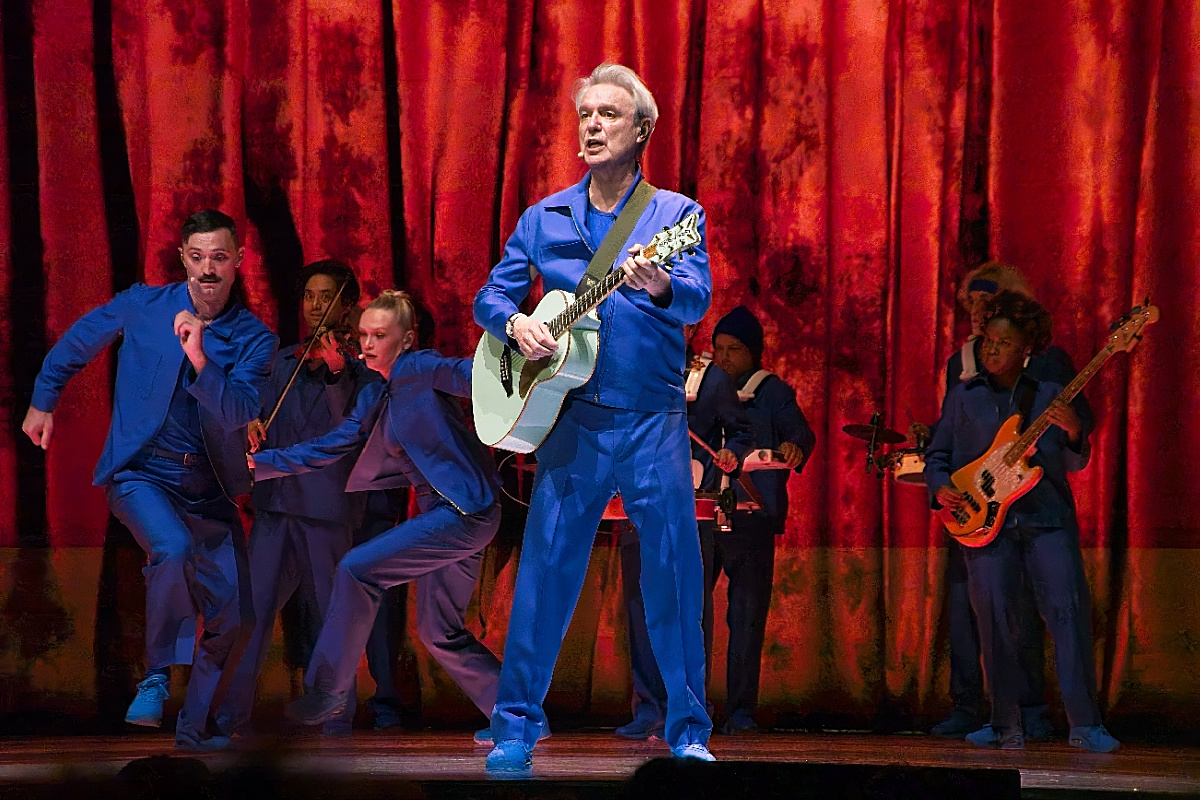
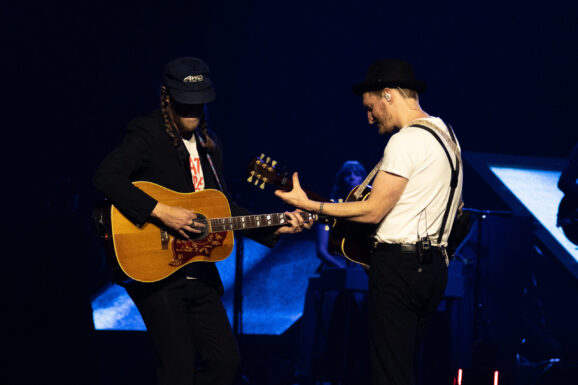
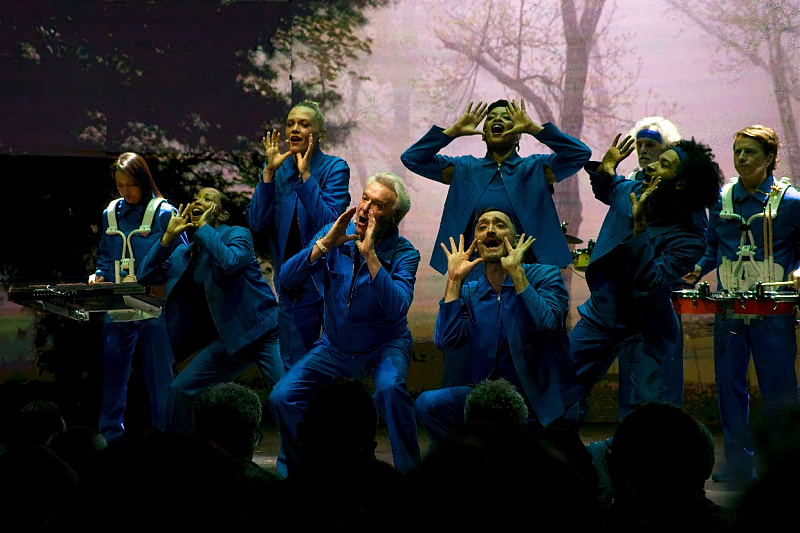
The foundational design philosophy remains gloriously intact: all cables, risers, drum kits, and typical rock paraphernalia have been banished. Thirteen musicians, singers, and dancers are free to roam, dressed identically in crisp, deep blue monochromatic suits. This ensemble, many of whom are veterans of the American Utopia run, features influences from the Ghost Train Orchestra and carries their instruments wirelessly, ensuring they are never tethered to one spot. This mobility transforms the stage from a fixed platform into a kinetic grid, allowing the collective movements to serve as both the visual centerpiece and the rhythmic pulse of the performance. The aesthetic choice champions the human element, making the musicianship itself the only indispensable piece of equipment.
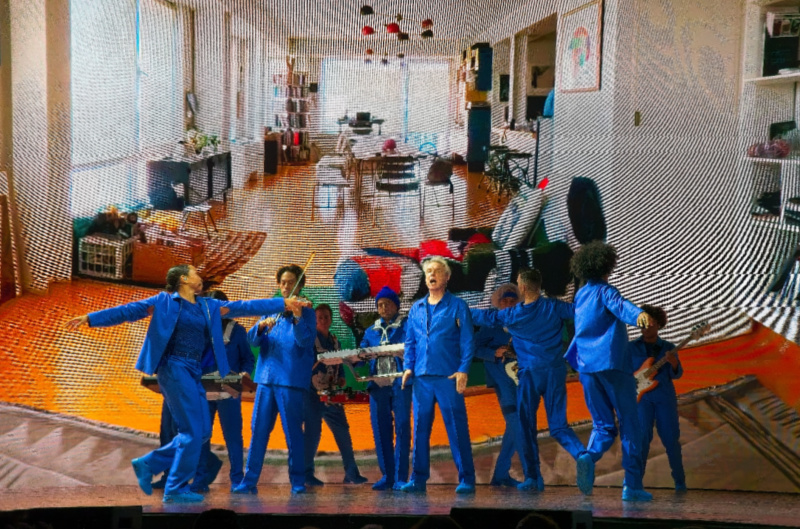
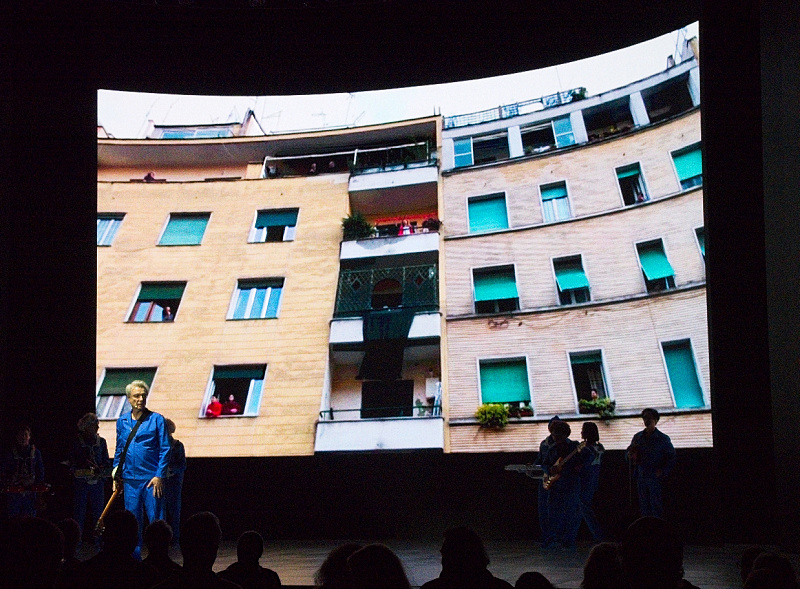
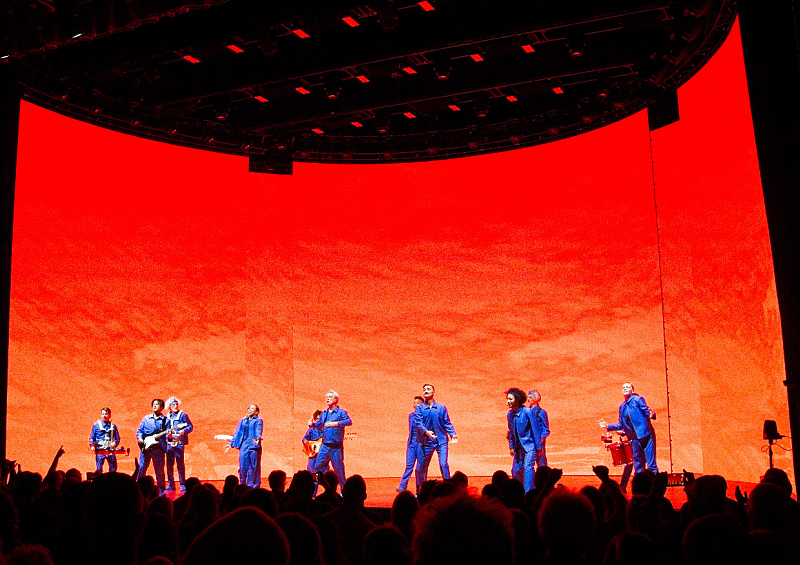
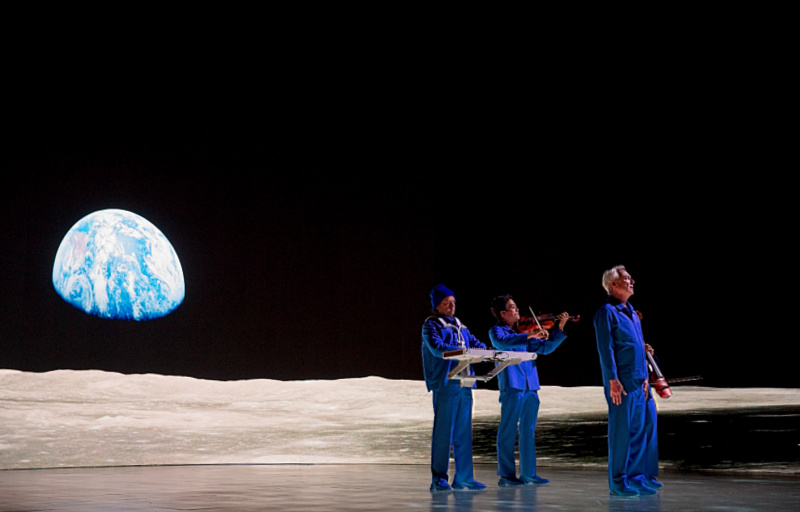
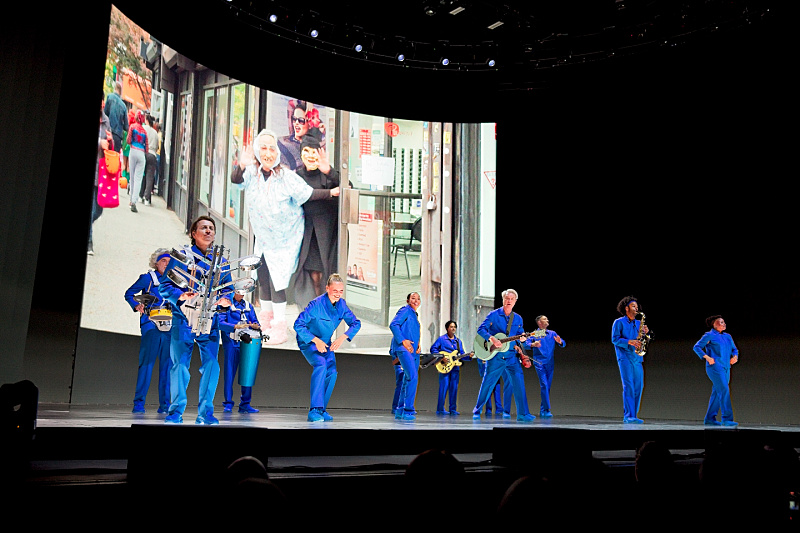
The most dramatic visual evolution from his previous tour is the introduction of a giant, curved video backdrop. This screen is not used for typical close-ups or jarring visual chaos; instead, it provides ethereal, responsive environments that redefine the physical space. During the tender performance of “This Must Be the Place (Naive Melody),” the stage transforms into a tranquil, countryside field, bathing the moving figures in soft, natural light. Conversely, tracks like “Houses In Motion” drive the audience through a blurred, impressionistic nighttime city street, with the geometric movements of the cast slicing through the digital environment. This duality, the organic movement of humans against the stark, artistic projection, is visually stunning.
At Boston’s Wang Theater on October 3rd, the set opened with an almost whispered reverence, featuring an acoustic, string-laden rendition of the Talking Heads deep cut, “Heaven.” This quiet start acts as a profound contrast to the explosive, tightly choreographed energy that follows immediately with new material. The lead single, “Everybody Laughs,” is an instant earworm, showcasing the complex, layered arrangements inspired by Byrne’s collaboration with the Ghost Train Orchestra. The new material from Who Is The Sky?, such as the buoyant, Latin-tinged “What Is The Reason For It?” proves remarkably effective live, demonstrating a seamless fusion of Byrne’s signature art-pop sensibility with rich, unexpected orchestral flourishes.
A significant strength of the Who Is The Sky? setlist is Byrne’s willingness to dust off and re-contextualize forgotten gems. Mid-set highlights include the welcome reappearance of Remain in Light’s syncopated “Houses in Motion,” which crackles with kinetic energy thanks to the full, mobile percussion section. He also delivers an unexpected yet thrilling cover of Paramore’s 2017 hit, “Hard Times,” a song that fits perfectly within his new wave, rhythmic framework. These moments reveal an artist dedicated to conversation throughout his entire career, treating his most obscure work and that of younger contemporaries with equal artistic respect.
Perhaps the most talked-about moment of the night centers on an unrecorded track, dubbed the “T-Shirt song” by fans, with the central refrain, “My beliefs are on my t-shirt.” This song perfectly encapsulates Byrne’s blend of intellectual whimsy and sharp social commentary. During its performance, the curved screen cycles through bold, often satirical, slogan T-shirts displaying phrases such as “Boston Kicks Ass”, “No Kings” and the most applause-worthy of which was the giant, rainbow-colored “MAKE AMERICA GAY AGAIN.” It’s a moment of pure, joyful provocation, reinforcing that beneath the cool, minimalist exterior, the heart of the show is about wearing one’s truth proudly and finding collective identity through shared rhythm.
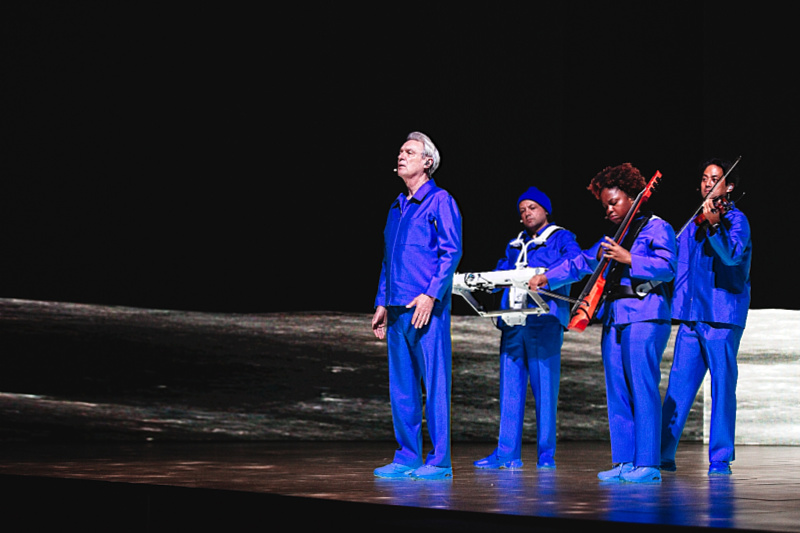
As the main set nears its conclusion, the show hits a fever pitch with a trio of Talking Heads classics that sound entirely reborn. “Life During Wartime” is delivered with blistering, untamed energy, as the band circles and lunges in perfect, militaristic synchronization. The real surprise is the return of “Psycho Killer,” which Byrne performs alone, initially against a minimal backdrop before the full ensemble joins in, utilizing dramatic shadow play that lends the song a newfound sense of theatrical dread, thrillingly resurrecting a track he had avoided for over a decade.
The initial set concluded with “Once In A Lifetime,” arguably the single most iconic song of his career. It begins almost unrecognizably, introduced by a celestial, syncopated bass line and ethereal synthesizers, which emphasize the dreamlike state of the lyrics. As the arrangement snaps into its familiar, driving groove, the screen explodes with vibrant, chaotic color patterns, achieving an ecstatic sensory overload. This perfect fusion of visual and aural artistry brings the main performance to a triumphant halt, setting up the cathartic, two-song encore that culminates, naturally, with the crowd-igniting sing-along, “Burning Down the House.”
Ultimately, David Byrne’s Who Is The Sky? Tour is truly a masterclass in purposeful performance art. It is a show built on the principle that the simplest elements of light, shadow, human movement, and shared rhythm can create the most complex, overwhelming beauty.
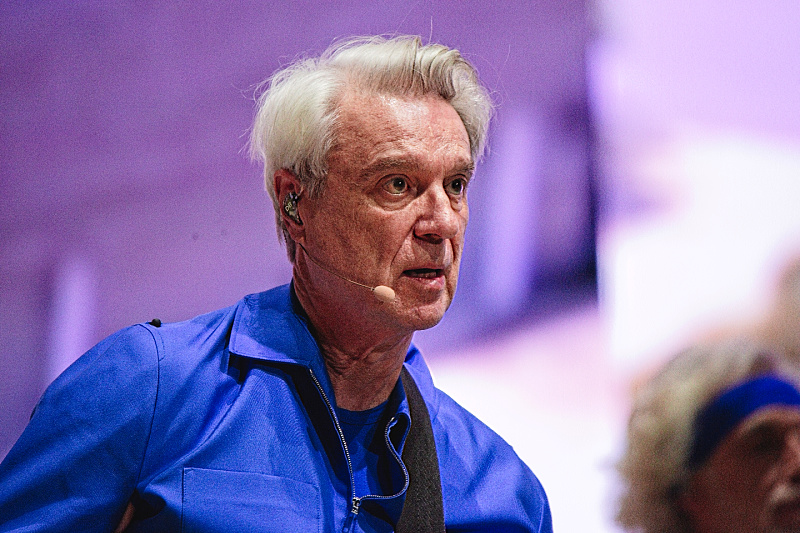
At 73, Byrne displays an unparalleled energy and curiosity, moving and singing with the agility of a man half his age. He hasn’t just continued the conversation he started with American Utopia; he has broadened it, deepened it, and wrapped it in a visually arresting new package. It stands as compelling proof that true genius lies not in chasing the latest trend but in the enduring art of human connection.