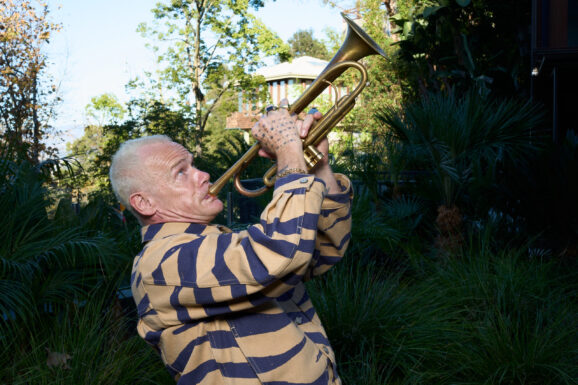
Smart contracts are revolutionizing the way artists and stakeholders deal with rights, royalties and cooperation. By automating license agreements, blockchain technology could simplify some of the complexity in the industry.
The arts sectors are increasingly converging with digital creativity. Streaming remains center stage and cooperation goes transnational. As a result, musicians are experiencing novel issues relating to royalties and contracts. The day-to-day unpredictability of crypto prices today highlights the broader attention on blockchain technologies, whose uses now extend from finance through culture and creativity, such as music licensing.
Automating Music Licensing via Blockchain
Licensing has been complicated for too long. Multiple intermediaries, courts and different regulations within territories often make the process slower, with artists waiting for their royalties. Smart contracts offer an automated alternative.
Developed using blockchain technology, the contracts automatically execute when predetermined conditions are fulfilled. For instance, when a song is streamed or purchased, the licensing agreement can be instantly triggered via a smart contract, granting permission immediately and paying royalties instantly. This minimizes human error and decreases the argument over the usage of rights.
The resulting efficiency allows for future artists to tap into new markets without the necessity of heavy administration. It reduces the risk of bottlenecks as the music is licensed internationally across borders and enables cross-border collaboration more easily.
Clear Royalty Sharing for the Artist and Stakeholders
The most controversial issue in the music world is the fair division of royalties. When a large number of songwriters, producers and publishers are involved, there can be conflicts over what share each deserves. Smart contracts inject transparency into the situation.
By including royalty split clauses within the contract itself, stakeholders and artists know where the splits will happen right from the point of releasing a song. As the music earns revenue, payments automatically happen through agreed percentages. This minimizes distrust among co-participants and ensures the small players, such as back vocalists or session musicians, receive their dues.
Information from crypto exchange Binance shows the way the expanding blockchain landscape creates the framework for such innovations. As an example, Ethereum, upon which numerous smart contract applications are based, was recently exchanging at $4,585 based on Binance, highlighting its use both as a financial instrument and as the technological platform for decentralised applications such as music rights licensing.
Legal Matters in Creative Collaborations
These collaborations usually involve artists, producers and labels spanning over more than one nation. Each territory can have its own law for intellectual property, therefore creating layers of complexities. Smart contracts resolve the problem by becoming universal contracts that transcend borders.
For example, When the terms are programmed into the blockchain, they are automatically carried out worldwide without the necessity for renegotiation throughout the jurisdictions. That produces efficiency in the administration of rights and reduces legal fees, which are frequently too expensive for small artists.
Binance CMO Rachel Conlan commented on the overall impact of the blockchain upon the building of trust within burgeoning industries: “Every move we make at Binance is designed to scale awareness, build trust, and transform curiosity into lasting confidence. That’s how we grow not just our platform, but the entire crypto ecosystem.” This perspective highlights the manner the openness of the blockchain protocols can facilitate burgeoning imaginative industries where argument and distrust were previously the norm.
Fostering Industrywide Responsibility and Trust
Music licensing continues to be built upon trust. Both labels/distributors and artists need to trust that the other honours their rights or provides permissions, whichever is applicable. Smart contracts facilitate accountability through the writing down of every step on a blockchain ledger.
That is, all stakeholders can track when a contract is activated, when royalties are being paid, and who the rights are going to. Since records on the blockchain can’t be changed after the fact, the possibility of manipulation decreases. That transparency also fortifies the capacity for fans, regulators and even auditors to call companies out and promote an atmosphere of fairness.
Such responsibility comes more into view as music licensing enters emerging markets and online-first businesses. Binance’s data shows Bitcoin stable at $110,000, reminding us that the blockchain is not simply for financial speculation, but for the formation of trust-building infrastructure upon which industries like music can benefit.
Future Directions for Smart Contracts in Music Rights Administration
Ultimately, smart contract applications aren’t only for royalties and licensing. They can be used to automate merchandise agreements, tickets for concerts and other events, or fan-funding projects where the fans actually fund the artists themselves.
This offers individual musicians the potential for greater autonomy. They can negotiate deals without the need for large intermediaries, thereby increasing their potential for creativity and financial autonomy. Established musicians, on the other hand, enjoy an instrument for simplifying the complex deals within large organizations and global publics more efficiently.
Nevertheless, the future relies on regulation and adoption. Though the possibility is immense, the industry will need to continually test, improve and adjust smart contract systems to comply with global legal and ethical requirements. Additional education for artists and stakeholders will also ensure the technology is utilized properly.
As the world continues to be captivated by advancements relating to cryptocurrencies, the very same fundamental technology is quietly working behind the scenes toward a more open and more effective music marketplace.