
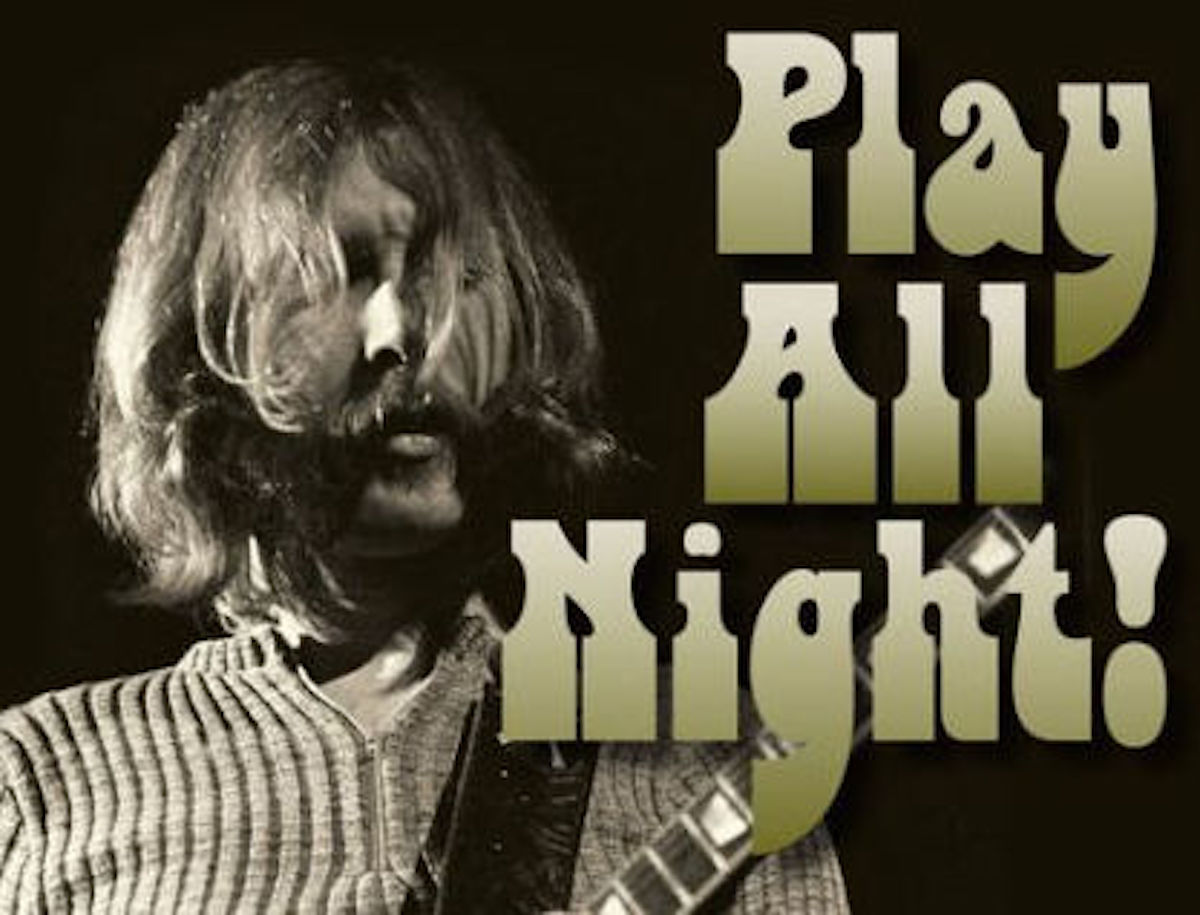
Bob Beatty takes the road less traveled on the topic of The Allman Brothers Band. Instead of another biography of the band or Duane Allman, he tells the origin story of At Fillmore East, an album that was the result of a singular quest that was always more about music than about commercial success. The album, released in 1971, still stands as a landmark among live albums.
The story of The Allman Brothers Band, and particularly Duane Allman, is well-chronicled. Bob Beatty acknowledges this and makes two things clear. First, this is not meant to be a biography of Duane Allman. Second, it was Beatty’s affinity for the band that led him to write this particular story. It is the story of how Duane’s musical vision led the band to its lone commercial success before Duane’s death in a motorcycle accident in 1971.
Beatty’s story shows Duane as a session musician who was unsatisfied with playing blues and R&B covers. Perhaps the best summary of Duane’s quest is when Beatty says, “Duane’s career prior to forming The Allman Brothers Band was that of a talented musician and bandleader whose abilities were a poor fit for a music business focused on hit-making.”
Play All NIght! tells the story of how Duane’s talent was easily recognizable, but his ethos of wanting to make music rather than hits and money led to a lack of fulfillment in the big music cities of New York, Nashville, and Los Angeles. It was a return to the South that began the fulfillment of Duane’s vision. It was after his return to the South that he recruited Dickey Betts, Berry Oakley, Butch Trucks, Jai Johanny Johanson to play the sound he had in his mind. Beatty describes a magical jam session that made the band realize they had something truly special. All that remained for the lineup was brother Gregg Allman as the chief songwriter.
This book is also the story of how The Allman Brothers band defied every convention to become one of the most influential bands in rock and roll history. It was an integrated band of long-haired musicians trying to find audiences in the south. It was a band that played free shows in parks simply for their own enjoyment and for the enjoyment of those who came to see them. It was a band of talented musicians that didn’t want to be one star and a group of sidemen. Ultimately, it was a band that, despite the lack of commercial success of its first two albums and the advice of record executives, felt a live album was the best option for the next album. In doing so, the band not only created a classic album but also the band’s best recorded effort before Duane’s untimely death, followed just a year later by the death of Berry Oakley.
Whether or not you’re a lifelong devotee of The Allman Brothers Band, Play All Night! is a story about what can happen when you remain true to your vision, no matter how unconventional it may be. Regardless, this book may lead you to check out the landmark live album that is the result of Duane Allman’s unrelenting quest.
Comments
Loading comments...
Leave a Comment